What on earth is going on with the world of live blood testing / live blood analysis / nutritional microscopy? The Advertising Standards Authority (ASA) has added a fourth company to their non-compliant online advertiser list who has been selling both a live blood test and a dried blood test, among other things, and doing so misleadingly as there's no evidence either is of much use as a diagnostic tool in a health setting.
There are a total of 46 non-compliant online advertisers on the ASA's list. Four of them are offering something to do with live blood tests - that seems a fairly high percentage. No evidence is forthcoming that it works though.
Many people offering live blood tests have been trained by Robert O Young who has some very peculiar ideas about alkalising diets as well as what can be seen under a micrsocope. Here's a page listing people who've been trained according to his methods and the country they're now flogging live blood tests in - I had a look at England and spotted a few familiar and unfamiliar names.
On one of the microscopist's pages, which is about their consultations, there's the question "What do you do with suspected cancer?" (full post here).
This seems a fairly disingenuous post. A young woman's doctor apparently gives her an unconfirmed diagnosis of suspected cancer and it seems some time is elapsing as she waits for these confirming tests to happen or for the results to appear. Meanwhile she undergoes the live blood test (with many pictures of the slides made from her blood on show) and makes changes to her diet. Whether it's the dietary changes that make her feel better I don't know... but what happened next?
The post ends with the phrase "Watch this space as we post her 3rd blood assessment pics soon" however no date is given so no-one really knows how long we'll have to wait to hear how this woman is doing.
Fortunately we have the Internet Archive's Wayback Machine which can't tell us the exact date either but it can show us a screenshot of the page as it was on 24 June 2010. Pretty much exactly the same it seems, so that page has been waiting for nearly two years for an update. I hope she's doing well.
Sunday, 31 March 2013


Thursday, 28 March 2013
Things you're doing wrong on Twitter (well not you, obviously)
You can tell me all the things I'm doing wrong on Twitter in the comments :)
Summary
1. Not using . before an @ when you want your tweet to be seen by more people
Don't put the @name first if you want your tweet to be seen by more people. You can either rewrite your tweet to put the @name somewhere else or cheat by sticking a . at the start.
2. Forgetting that threaded conversations means other people can view your contributions
If you reply to a tweet with lots of names in and delete some of them, your tweet is still part of the thread and can be seen by anyone who clicks on any of the threaded tweets.
If you want to break this one, send a fresh tweet and don't click reply.
3. Missing conversations that don't mention you / your brand but link to your website (businesses)
Search for your company's http://www.website.com and you should find all sorts of conversations going on where people are linking to your site, talking about your product (though they might not refer to you directly). Also it doesn't matter if they've used URL shorteners, Twitter will still pick the links up. You can use Topsy.com as an adjunct search.
More detailed version...
1. Not using . before an @ when you want your tweet to be seen by more people
This might be a consequence of the way we think about the @mention - it's used both as an address but also as someone's name.
There are lots of tweets like this:
@JoeBloggs is going to skydive for our charity, support him here [link]
In the above tweet the person sending it is saying that "Joe Bloggs" is going to do something, but what they've done is addressed the message to JoeBloggs. This tweet will appear in JoeBlogg's timeline (and the timeline of anyone following both you and him).
If you want to tell your followers that someone is going to do something, and let them know who that someone is then the first character in your tweet must be something other than the @ symbol. By convention a dot . is used but it can be any character.
.@JoeBloggs is going to skydive for our charity, support him here [link]
or
Want to support @JoeBloggs who is skydiving for our charity? Here's his fundraising page [link]
In the second example there are obviously more characters than . but because they come before the @ symbol all of your followers can read the tweet. You can either reformat the tweet so that the @name comes somewhere else in the sentence or just add any character before the @ at the start of the tweet, a dot is the least intrusive.
2. Forgetting that threaded conversations means other people can view your contributions
Because pressing 'reply' usually brings up all the people mentioned in the previous tweet while giving you the option to delete some of them you may believe that doing so means you're only sending your message to one or two people. You're not. The act of pressing reply means that your tweet is included in the threaded conversation and will show up whenever anyone clicks on any of the other messages to see the threaded discussion.
The only way to escape from a threaded conversation is to create a new one instead of clicking reply. Obviously your tweets are every bit as public but they are not brought to the surface as much if they're not part of a thread.
I'm sure most people know that everything they write on Twitter is public (except direct messages) and can be seen by other people if they visit your profile which shows all the tweets you've sent. However replying to a threaded conversation gives an extra visibility to your tweet.
Also, sticking a . in front does not break the thread (I think it used to, but not these days).
3. Missing conversations that don't mention you / your brand but link to your website (really for businesses)
Hopefully everyone's worked this out but if you're keeping an eye on relevant keywords and your at-mentions you might be missing other conversations. People might post a link to a page buried within your website, or your homepage and you can find them all by searching for the basic unit of your web address which is basically the bit before any single forward slashes /
A search for http://www.website.com will bring up http://www.website.com/page1 and http://www.website.com/folder1/page2 etc and even if the URL is shortened by Twitter (t.co) or by anyone else (bit.ly, tinyurl.com, is.gd etc) the search will still pick it up.
Of course this means it's a bit harder if you want to tweet a link covertly ;) Though not impossible.
Also worth searching Topsy.com for more detailed searches.
Summary
1. Not using . before an @ when you want your tweet to be seen by more people
Don't put the @name first if you want your tweet to be seen by more people. You can either rewrite your tweet to put the @name somewhere else or cheat by sticking a . at the start.
2. Forgetting that threaded conversations means other people can view your contributions
If you reply to a tweet with lots of names in and delete some of them, your tweet is still part of the thread and can be seen by anyone who clicks on any of the threaded tweets.
If you want to break this one, send a fresh tweet and don't click reply.
3. Missing conversations that don't mention you / your brand but link to your website (businesses)
Search for your company's http://www.website.com and you should find all sorts of conversations going on where people are linking to your site, talking about your product (though they might not refer to you directly). Also it doesn't matter if they've used URL shorteners, Twitter will still pick the links up. You can use Topsy.com as an adjunct search.
More detailed version...
1. Not using . before an @ when you want your tweet to be seen by more people
This might be a consequence of the way we think about the @mention - it's used both as an address but also as someone's name.
There are lots of tweets like this:
@JoeBloggs is going to skydive for our charity, support him here [link]
In the above tweet the person sending it is saying that "Joe Bloggs" is going to do something, but what they've done is addressed the message to JoeBloggs. This tweet will appear in JoeBlogg's timeline (and the timeline of anyone following both you and him).
If you want to tell your followers that someone is going to do something, and let them know who that someone is then the first character in your tweet must be something other than the @ symbol. By convention a dot . is used but it can be any character.
.@JoeBloggs is going to skydive for our charity, support him here [link]
or
Want to support @JoeBloggs who is skydiving for our charity? Here's his fundraising page [link]
In the second example there are obviously more characters than . but because they come before the @ symbol all of your followers can read the tweet. You can either reformat the tweet so that the @name comes somewhere else in the sentence or just add any character before the @ at the start of the tweet, a dot is the least intrusive.
2. Forgetting that threaded conversations means other people can view your contributions
Because pressing 'reply' usually brings up all the people mentioned in the previous tweet while giving you the option to delete some of them you may believe that doing so means you're only sending your message to one or two people. You're not. The act of pressing reply means that your tweet is included in the threaded conversation and will show up whenever anyone clicks on any of the other messages to see the threaded discussion.
The only way to escape from a threaded conversation is to create a new one instead of clicking reply. Obviously your tweets are every bit as public but they are not brought to the surface as much if they're not part of a thread.
I'm sure most people know that everything they write on Twitter is public (except direct messages) and can be seen by other people if they visit your profile which shows all the tweets you've sent. However replying to a threaded conversation gives an extra visibility to your tweet.
Also, sticking a . in front does not break the thread (I think it used to, but not these days).
3. Missing conversations that don't mention you / your brand but link to your website (really for businesses)
Hopefully everyone's worked this out but if you're keeping an eye on relevant keywords and your at-mentions you might be missing other conversations. People might post a link to a page buried within your website, or your homepage and you can find them all by searching for the basic unit of your web address which is basically the bit before any single forward slashes /
A search for http://www.website.com will bring up http://www.website.com/page1 and http://www.website.com/folder1/page2 etc and even if the URL is shortened by Twitter (t.co) or by anyone else (bit.ly, tinyurl.com, is.gd etc) the search will still pick it up.
Of course this means it's a bit harder if you want to tweet a link covertly ;) Though not impossible.
Also worth searching Topsy.com for more detailed searches.
Friday, 22 March 2013
Thwarting spammers on hashtag livetweeted events
Summary
Type this into Twitter's search page (or on your smartphone Twitter app's search)
#hashtag -x.co
where #hashtag is the tag you're interested in and x.co is the URL shortener being used by spammers (eg it could be -bit.ly).
Note that this also works on Storify should you want to capture the hashtagged tweets minus the spammers' contributions.
Update 21 Jan 2014 (welcome #iscg visitors) - you can also use the slightly more obscure URL shortener is.gd to shorten your URLs, chances are the spammers restrict themselves to x.co and bit.ly. There are a variety of URL shorteners out there so it's possible to keep a step ahead. Good luck and happy conferencing :)
More detailed explanation
We all know that if a word, phrase or hashtag starts trending then it attracts the interest of spammers hoping to exploit the eyeballs of those watching the stream of tagged tweets.
Generally spammers include a link, though sometimes it's just text (rarer) and if they do then it's worth trying to subtract the root URL from the hashtag search.
So if you're watching the search output results from #RCGPSoMe (Royal College of General Practitioners Social Media chat) and annoyed by spam links coming from x.co then search for #RCGPSoMe and not for x.co, thus: #RCGPSoMe -x.co which gives you this URL:
https://twitter.com/search?q=%23RCGPSoMe%20-x.co&src=typd
(the %23 means # and %20 is just a space).
Since the spammers are also using bit.ly then I'd recommend pruning that one out too, so type into Search
#RCGPSoMe -x.co -bit.ly and remind people to use tinyurl.com or t.co or some other URL shortener so their tweets aren't mangled too.
Search for #RCGPSoMe -x.co -bit.ly which gives you
https://twitter.com/search?q=%23RCGPSoMe%20-x.co%20-bit.ly&src=typd
1. This works both on https://twitter.com/search (ie the web version) and on Echofon on my iPhone, just by typing in the keystring
2. I'm aware there's an app / tool / site which will collect tweets only from people who've registered, ignoring the spam, but have forgotten what it is. Tweetchat.com will help a bit but not perfect.
3. The search string also works on Storify! This means you can semi-automate the capture of appropriately hashtagged tweets, hooray.
I can't take credit for the search string though it was certainly a case of fortune favouring the prepared mind. I suspected it might work and Googled to see if others had investigated and these two had come up with something: A trick for stopping event hashtag spam (1 October 2012) but an alternative, which may not work as well now that Twitter has hidden the info on the app used to send the tweet, was Finding ways to battle hashtag spam (7 May 2012).
Type this into Twitter's search page (or on your smartphone Twitter app's search)
#hashtag -x.co
where #hashtag is the tag you're interested in and x.co is the URL shortener being used by spammers (eg it could be -bit.ly).
Note that this also works on Storify should you want to capture the hashtagged tweets minus the spammers' contributions.
Update 21 Jan 2014 (welcome #iscg visitors) - you can also use the slightly more obscure URL shortener is.gd to shorten your URLs, chances are the spammers restrict themselves to x.co and bit.ly. There are a variety of URL shorteners out there so it's possible to keep a step ahead. Good luck and happy conferencing :)
More detailed explanation
We all know that if a word, phrase or hashtag starts trending then it attracts the interest of spammers hoping to exploit the eyeballs of those watching the stream of tagged tweets.
Generally spammers include a link, though sometimes it's just text (rarer) and if they do then it's worth trying to subtract the root URL from the hashtag search.
So if you're watching the search output results from #RCGPSoMe (Royal College of General Practitioners Social Media chat) and annoyed by spam links coming from x.co then search for #RCGPSoMe and not for x.co, thus: #RCGPSoMe -x.co which gives you this URL:
https://twitter.com/search?q=%23RCGPSoMe%20-x.co&src=typd
(the %23 means # and %20 is just a space).
Since the spammers are also using bit.ly then I'd recommend pruning that one out too, so type into Search
#RCGPSoMe -x.co -bit.ly and remind people to use tinyurl.com or t.co or some other URL shortener so their tweets aren't mangled too.
Search for #RCGPSoMe -x.co -bit.ly which gives you
https://twitter.com/search?q=%23RCGPSoMe%20-x.co%20-bit.ly&src=typd
1. This works both on https://twitter.com/search (ie the web version) and on Echofon on my iPhone, just by typing in the keystring
2. I'm aware there's an app / tool / site which will collect tweets only from people who've registered, ignoring the spam, but have forgotten what it is. Tweetchat.com will help a bit but not perfect.
3. The search string also works on Storify! This means you can semi-automate the capture of appropriately hashtagged tweets, hooray.
I can't take credit for the search string though it was certainly a case of fortune favouring the prepared mind. I suspected it might work and Googled to see if others had investigated and these two had come up with something: A trick for stopping event hashtag spam (1 October 2012) but an alternative, which may not work as well now that Twitter has hidden the info on the app used to send the tweet, was Finding ways to battle hashtag spam (7 May 2012).
Monday, 18 March 2013
£6.50 for a ticket transaction fee is a bit much isn't it?
I was thinking about going to an event at the Sundance London film festival in April - film composer David Arnold is talking about his work. Last year I saw composer Harry Gregson-Williams talk about his work in film composition and I could quite cheerfully hear from all film composers (and anyone else who's involved in making films happen) telling me about their work.
The tickets are a very reasonable £14 but when the checkout page told me I was signing up for £20.50 my first thought was that I'd mistakenly ticked the box to say I wanted a ceramic Sundance Festival mug (I kind of do, to be honest) - there is a transaction fee of £6.50. That seems to be pushing it a wee bit, no?
Here's what See Tickets, who are completing the ticket transactions on behalf of the festival have to say:
"This fee can also apply to tickets arranged for collection"? Are they printed on vellum?
It turns out that there's also a surcharge on the face value of the ticket. The event actually costs £12.50 (the face value) but See Tickets also charge a bit extra on that:
The tickets are a very reasonable £14 but when the checkout page told me I was signing up for £20.50 my first thought was that I'd mistakenly ticked the box to say I wanted a ceramic Sundance Festival mug (I kind of do, to be honest) - there is a transaction fee of £6.50. That seems to be pushing it a wee bit, no?
Here's what See Tickets, who are completing the ticket transactions on behalf of the festival have to say:
"The transaction fee covers the costs of processing your order, packing and delivering the tickets to you. In many cases it also covers the cost of producing your tickets. This fee can also apply to tickets arranged for collection.
The transaction fee applies per order not per ticket. If you purchase six tickets, you only pay one transaction fee.
The transaction fee will vary depending on what type of postage we are being asked to use by the event organiser and these costs are reflective of the amount that See are charged by despatch companies. First class post and Registered Post prices will vary accordingly.
See only send tickets securely for events that do not issue duplicate tickets in the event that tickets get lost in the post."
"This fee can also apply to tickets arranged for collection"? Are they printed on vellum?
It turns out that there's also a surcharge on the face value of the ticket. The event actually costs £12.50 (the face value) but See Tickets also charge a bit extra on that:
"The face value of a ticket is set by the event organisers. They don't pay us anything to sell their tickets, so in order to make money See has to charge a little bit on top. The ticket cost is the face value plus the booking fee. We have to do this on a per-ticket basis to cover the cost of providing a 7 days a week, 24 hours a day booking service, labour costs, credit card commissions and all the other costs associated with running our business. The actual amount we charge is negotiated with the venue or promoter for each event.So there's a booking fee and a transaction fee, totalling £8 on a £12.50 ticket. Hmm. Feels a bit fleece-y although the event sounds brilliant and I want to go.
For some shows, such as those held in West End theatres, there is no booking fee - the £1 shown is a restoration levy collected on behalf of the theatre."
Thursday, 14 March 2013
When did we start photographing bits of things? Or am I noticing something that isn't new?
I might be wrong (could be confirmation bias) but I get the impression that there's been an increase in people taking photographs of bits of things in addition to (perhaps in preference to) photographs of the whole thing, ie as an accent, or colour, or to evoke a mood - Instagram is full of it, and I am certainly guilty of it too. Though I do think the photos are pretty.
(Edit: I'm not really talking about recording things for scientific purposes, which is certainly an example of people focusing closely on one aspect of a thing and also the thing in context, just about people taking snaps that don't encompass the full item, and looking at just an aspect of it).
Until I've worked out how to embed an Instagram pic I'll have to make do with a link, so here's one I took of the inside of a British Gas envelope - I think it's probably pretty obvious to most British Gas customers what it is http://instagram.com/p/ipfmI/
Note that this wasn't a macro photography shot, but I've been doing a fair bit of that as well by using a small drop of water on my iPhone - you can get some quite impressive shots - here's a close-up I took of a pound coin.
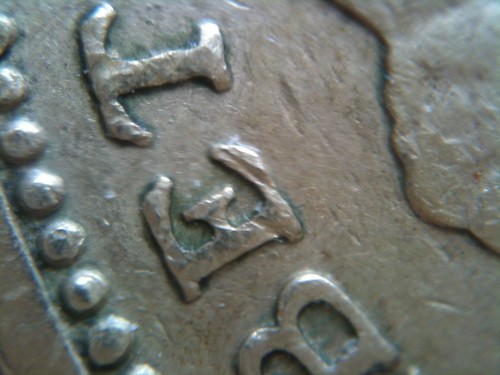
Is this shift that I think I'm perceiving a consequence of changes in the capability of cameras - easier to get close ups, more options with different kinds of lenses, with digital 'film' maybe people might be more confident about trying things that don't work etc., without worrying about the expense of wasting resources, or is it more to do with the way we look at stuff?
To me these evoke 'London'...
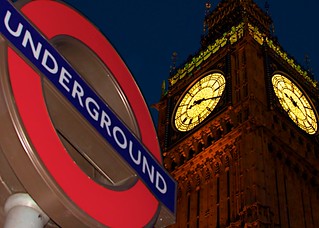

...every bit as much as larger shots of London vistas do

I know that people painted landscape scenes as well as studies on individual flowers so I'm not claiming that no-one has ever looked at things at different levels before, but I've certainly started noticing it a lot more. When I 'see' London I do see it all at once like this but even if I don't concentrate on the little fiddly bits (the pattern on Big Ben's tower, the little wiggly bits on the spire) if I see them separately I immediately recognise them as part of my landscape.
Is it a change in the way we think about how we look at stuff (perhaps we are becoming more artistic!) or a change in technology, or just me spotting a few instances of it and then just noticing it all the time?
(Edit: I'm not really talking about recording things for scientific purposes, which is certainly an example of people focusing closely on one aspect of a thing and also the thing in context, just about people taking snaps that don't encompass the full item, and looking at just an aspect of it).
Until I've worked out how to embed an Instagram pic I'll have to make do with a link, so here's one I took of the inside of a British Gas envelope - I think it's probably pretty obvious to most British Gas customers what it is http://instagram.com/p/ipfmI/
Note that this wasn't a macro photography shot, but I've been doing a fair bit of that as well by using a small drop of water on my iPhone - you can get some quite impressive shots - here's a close-up I took of a pound coin.
Is this shift that I think I'm perceiving a consequence of changes in the capability of cameras - easier to get close ups, more options with different kinds of lenses, with digital 'film' maybe people might be more confident about trying things that don't work etc., without worrying about the expense of wasting resources, or is it more to do with the way we look at stuff?
To me these evoke 'London'...
...every bit as much as larger shots of London vistas do
I know that people painted landscape scenes as well as studies on individual flowers so I'm not claiming that no-one has ever looked at things at different levels before, but I've certainly started noticing it a lot more. When I 'see' London I do see it all at once like this but even if I don't concentrate on the little fiddly bits (the pattern on Big Ben's tower, the little wiggly bits on the spire) if I see them separately I immediately recognise them as part of my landscape.
Is it a change in the way we think about how we look at stuff (perhaps we are becoming more artistic!) or a change in technology, or just me spotting a few instances of it and then just noticing it all the time?
Subscribe to:
Posts (Atom)



 Posts
Posts

