Homeopathy enthusiast Laurie J Willberg implies, rather overconfidently, that no-one has ever written a blog post about a pharma drug curing them.
Here's one.
Certainly there are plenty of others. I encourage anyone who feels like doing so to write up a brief report of any medication they've
taken that's solved any illness they've ever had. The nice thing is that
homeopaths accept anecdotal evidence so a simple report of the nature of
the illness and the medication taken will suffice ;)
Then let's have a blog carnival (not heard that term in years! Perhaps this is why.) and I'll link any posts I hear about below. Probably we can't include conditions like Type 1 diabetes and insulin treatment though because insulin doesn't cure someone of diabetes (they still have the condition) but it does allow people to stay alive in a way that they really might not have in the time before insulin injections were available. But 'cure' has a very specific and pedantic meaning, so... anyway here's the tale of my pharma-based recovery.
For balance I recommend reading Ben Goldacre's Big Pharma book which is critical of some of the systems and pressures that affect the way medicine works, including problems with trial design and reporting.
Jo's anecdotal report of being cured by pharma drugs
Overview
I didn't receive a formal diagnosis of whatever it was that made me ill but it seems quite possible that it was something very similar to 'walking pneumonia' which appeared to have both a viral and bacterial component (or possibly sequentially). I was really not well but I fully recovered in a few days with paracetamol, antibiotics (pharmacology), fluids (sort of pharmacology) and monitoring (good care) so here's my post explaining how paracetamol, clarithromycin and amoxicillin cured me of a chest infection helped along by nutrients like glucose and saline and measuring blood pressure, pulse and temperature to see how things were going.
That time I was a bit ill in January 2016On
Thursday 7 January 2016 I woke up at 5am with a nasty cough which kept
me awake on and off until 10am (at the time I didn't work on Thursdays so it was a day
off anyway) and was annoying but no more than any other cough / chest
infection.
I had breakfast and checked emails etc and
pottered around for a bit but noticed that I felt a bit spacy and not
quite right, and then I noticed my heart rate - it was 100. My resting
pulse varies between 62 and 72 but I wouldn't have minded even 80 or 90,
but 100 seemed a bit much. I went to sleep for a couple of hours to see
if that helped but woke up and felt worse and pulse was up to 120. A
shower didn't help either and I realised that it was getting faster, to
the point that it was difficult to count the beats. Plus I felt not at
all well and had found the exertion of getting in and out of the shower
quite hard, normally it's not exerting at all.
By the
time I'd got a taxi sorted to take me to A&E (it wasn't quite a
blue-light ambulance situation, though in retrospect perhaps it should have been) I
was quite breathless and finding it difficult to talk. Once I got to
A&E I felt quite panicky, a sort of dawning realisation that I
can't be very well if I'm in A&E and began to get tingling in my
arms and hands (not legs or feet though). Things moved very quickly
after I was triaged by a lovely person who tried to relax me, despite
telling me I was in 'high AF' (atrial fibrillation where the heart
rhythm goes awry and the sequence of events that brings blood into the
heart and pumps it out again gets out of sequence, my heart was going so
fast it was kind of missing steps out!) and I was put on an ECG machine
and hooked up to blood pressure (184/something or other so very high - it went up to over 200 before dropping later). I
didn't have any chest or left-arm pain - they asked, and I said my chest felt a bit exhausted, but no crushing or burning sensations.
Lovely
nurse and doctor came and had a chat and asked me lots of questions
about my medical history (uncomplicated picture of health) and I noticed
that everyone seemed to perk up a bit when I said I'd never smoked. I had been put on fluids and must have been feeling better because at that point I
asked the doctor about that - it seemed counterintuitive to me that if
my pressure was high, then introducing more fluids into the situation
seemed like a bad idea. It apparently doesn't work like that and he said
I was quite dehydrated, which surprised me no end as I'd had a pint of
milk and a 500ml bottle of water earlier in the day. But when you're
fighting an infection your fluid requirements might be a bit higher than
normal and to be honest I'd probably panted quite a lot out trying to
breathe / cool down!
Possibly my use of the word
'tachycardia' rather than fast heart-rate prompted the doctor to ask if I
had a medical background. I explained that I didn't but had worked in
the area so understood a fair bit (though I'm obviously not medically
trained). This made things quite interesting as I got to hear a bit more
about the tests they were doing, and the worst one was coming up.
If
you are ever told you'll be having blood drawn from the artery in your
wrist (an ABG [arterial blood gases] test) and they offer you a local
anaesthetic, accept that anaesthetic. I thought having a line for a drip
put in the vein my front elbow (is there a word for that, medical or
otherwise... crook?) was uncomfortable. My veins are quite deep so it
was quite an effort for people to get bloods out of me for the morning
tests, and to get fluids in. I was a pin cushion of bruises.
Anyway
after a bit of jabbing they got some blood out of the artery but
unfortunately the machine stopped working so they had to do it again. I
insisted they give the other wrist a go to let the first recover (by
this time is was after 9pm so I'd been there for four hours) and didn't
have anaesthetic there either. At one point the needle contacted my
radial nerve and I must have let out a bit of a yelp as that was a
pretty acute and unpleasant experience - it felt as if molten lava was
flowing across my hand. For a week afterwards every time I put on a jumper and stretched out my arm I got a shooting pain along the nerve but thankfully nerves recover and that went quite quickly.
The test lets them infer what any bacteria might be doing, presumably I might have been at risk of having bacteria in the blood (or worse, bacteria in the blood that weren't responding to medication) but the results were only a little higher than normal and not a cause for alarm, at least that's my understanding of it. The doctor also mentioned that I'd been cyanotic when I arrived (blue around the edges, not a good sign if it comes on suddenly - I'd not noticed it) but by now I was 'back in sinus rhythm' which is good news in my book.
Two days later everything had returned to 'higher than normal' rather than 'blimey, high' and being out of danger I was allowed to go home and continue getting things back to normal myself, with the medication highlighted above. I set myself up a list with timings and the medications I should take at times throughout the day and followed it religiously, also monitoring my temperature which remained normal. I didn't overexert myself (another doctor cautioned against treating myself as if I was much better before I really was, to avoid some sort of post-viral fatigue thing - I don't know much about that but cheerfully followed the advice to chill out).
Without a formal diagnosis I can't prove what I had, or how seriously ill I was. For example I don't think I had sepsis but perhaps if I'd not gone to hospital promptly things might have headed in that direction. If you're a doctor reading and can clarify anything I've misunderstood I'm happy to hear about it. I was relieved to recover and am happy to write this, and indeed any, post highlighting that homeopathy is a load of twaddle and won't cure anyone of anything.
Blog carnival placemarker for others' anecdotal cures
• your blog post here...
Sunday, 18 December 2016
Sunday, 11 December 2016
There's a petition to Wikipedia asking it to be less mean to homeopathy + FTC action in US
Wikipedia petition
By any metric this is a very successful petition. At the time of writing it is 531 people shy of reaching 15,000 signatures all of whom are signing in support of the petition's aim to amend Wikipedia's article on homeopathy. Many fans of homeopathy are concerned that the article, as it currently stands, is biased against homeopathy and excludes evidence of its successes in treating people (and animals). The fact that the evidence is not of sufficient quality is neither here nore there.
What amuses me most about the petition is that it is TO Wikipedia, an organisation whose founder agrees that the best evidence shows homeopathy to be no better than placebo.
I am one of many people who have edited the homeopathy page on Wikipedia. Anyone can edit it, and the edit will remain as long as they have made a sensible contribution. If not, their contribution is either simply wiped by reverting the page to its previous edit or the contribution is amended by someone else.
Sending a petition 'to Wikipedia' is sending a petition to me and to all other people who've edited that page. Obviously I can only speak for myself but 'bad luck' is my official response to this petition ;)
Have a giggle over at https://www.change.org/p/wikipedia-call-to-action-to-update-homeopathy-at-wikipedia
FTC toughens up on labelling rules for homeopathy pills
There's been quite a lot in the news lately about the US's Federal Trade Commission's toughened stance on the labelling of over the counter (OTC) homeopathy pills. Homeopathy confections must now include text on the packaging which makes it clear that there's no scientific evidence supporting the use of the pills for health conditions. This is a big deal, but it is not quite right to say - as headlines have - that the FTC requires manufacturers to say the pills don't work. Although it is rather implied.
It would be interesting to know if consumers pay a great deal of attention to the labelling and, more importantly, if they understand its implication. Saying something has no scientific evidence in its favour is vastly more oblique than saying "these pills do not work".
The FTC's publication "Enforcement Policy Statement on Marketing Claims for OTC Homeopathic Drugs" on the updated rules for homeopathy marketing says
I also wonder if this updated labelling will make it harder for consumers, on realising they've been duped, to get their money back. After all the products will now say (or at least more strongly imply) in the small print that there's no good evidence that a 'pill for self-limiting condition X' is any good at helping the symptoms of X. Buyer beware.
Homeopathy 'treatments' must be labelled to say they do not work, US government orders (21 November 2016) The Independent
The Federal Trade Commission has demanded that producers of homeopathic treatments say on the label that they do not work
By any metric this is a very successful petition. At the time of writing it is 531 people shy of reaching 15,000 signatures all of whom are signing in support of the petition's aim to amend Wikipedia's article on homeopathy. Many fans of homeopathy are concerned that the article, as it currently stands, is biased against homeopathy and excludes evidence of its successes in treating people (and animals). The fact that the evidence is not of sufficient quality is neither here nore there.
What amuses me most about the petition is that it is TO Wikipedia, an organisation whose founder agrees that the best evidence shows homeopathy to be no better than placebo.
I am one of many people who have edited the homeopathy page on Wikipedia. Anyone can edit it, and the edit will remain as long as they have made a sensible contribution. If not, their contribution is either simply wiped by reverting the page to its previous edit or the contribution is amended by someone else.
Sending a petition 'to Wikipedia' is sending a petition to me and to all other people who've edited that page. Obviously I can only speak for myself but 'bad luck' is my official response to this petition ;)
Have a giggle over at https://www.change.org/p/wikipedia-call-to-action-to-update-homeopathy-at-wikipedia
FTC toughens up on labelling rules for homeopathy pills
There's been quite a lot in the news lately about the US's Federal Trade Commission's toughened stance on the labelling of over the counter (OTC) homeopathy pills. Homeopathy confections must now include text on the packaging which makes it clear that there's no scientific evidence supporting the use of the pills for health conditions. This is a big deal, but it is not quite right to say - as headlines have - that the FTC requires manufacturers to say the pills don't work. Although it is rather implied.
It would be interesting to know if consumers pay a great deal of attention to the labelling and, more importantly, if they understand its implication. Saying something has no scientific evidence in its favour is vastly more oblique than saying "these pills do not work".
The FTC's publication "Enforcement Policy Statement on Marketing Claims for OTC Homeopathic Drugs" on the updated rules for homeopathy marketing says
"In light of the inherent contradiction in asserting that a product is effective and also disclosing that there is no scientific evidence for such an assertion, it is possible that depending on how they are presented many of these disclosures will be insufficient to prevent consumer deception. Marketers are advised to develop extrinsic evidence, such as consumer surveys, to determine the net impressions communicated by their marketing materials." (emphasis added)Telling people homeopathy doesn't work hasn't stopped people from using it so I can't really see that obliquely implying it by phrasing it as 'there's no scientific evidence that homeopathy works' would make a great deal of difference.
I also wonder if this updated labelling will make it harder for consumers, on realising they've been duped, to get their money back. After all the products will now say (or at least more strongly imply) in the small print that there's no good evidence that a 'pill for self-limiting condition X' is any good at helping the symptoms of X. Buyer beware.
Homeopathy 'treatments' must be labelled to say they do not work, US government orders (21 November 2016) The Independent
The Federal Trade Commission has demanded that producers of homeopathic treatments say on the label that they do not work
Wednesday, 23 November 2016
Latest regulatory action on homeopathy, at home and abroad
by @JoBrodie, brodiesnotes.blogspot.com
In response to the recently 'reaffirmed' guidance (perhaps read that as "you've got away with it for a bit too long and we've had enough") from the ASA (Advertising Standards Authority) on homeopathy marketing the SoH have objected to a focus on homeopaths (which has largely been driven by skeptics - we've also got the ASA to look more closely at other things and they've produced guidance on live blood analysis for example).
They consider that the ASA is unfairly targeting them (though as Alan Henness, writing on the Nightingale Collaboration website(2), notes - they implicitly acknowledge that it's the same law for everyone) and they are [tee hee] considering mounting some sort of legal challenge [ha ha] against the ASA.
No-one is sure why. Even if their actions were to wipe out the ASA there's still Trading Standards (TS) to contend with and we can all report homeopaths directly to TS, who can instigate criminal proceedings. The ASA is a bit like a fuse or canary in the coalmine and if homeopaths (only the ones that make misleading health claims) work with them they can probably avoid further trouble.
I expect homeopaths will make a legal challenge to skeptics to try and stop us from reporting their misleading peers to any regulatory body ;)
It may be helpful for homeopaths to understand the following, I'm not sure if they do. The UK's regulations for marketing in the UK cover obvious things like websites and leaflets but they also cover Twitter, Facebook and Instagram posts. Many homeopaths have blocked skeptics from these social media but they'd do well to understand that unless the account is private blocked people can just log out to view posts (or use third party apps, or scrape tweets directly from Twitter's API via IFTTT etc). In short, we can see your posts, so please don't post misleading stuff, thanks.
Here's my response to Andy's post.
The FTC (Federal Trade Commission) in the US also appears to have had it up to here (makes head-height gestures) with homeopaths implying that homeopathy is something akin to medicine when it really should be in the home baking or tea-sweetening aisles. They have published new guidelines(3) requiring homeopathic products to state clearly on the labelling that there's no scientific evidence that they work.
This should prove interesting...
In the world of science communication we have understood for some time that giving people more information about science, or correcting misinformation, doesn't automatically lead to people being more favourable towards science. In fact it can just as easily backfire and make them more entrenched. People who believe in homeopathy probably aren't going to care (or even notice) that people they already don't trust are telling them products they like are rubbish. I suspect the new labelling will not be a very effective leverage point for skeptics to use in keeping homeopathy marketing honest in the US.
I wonder if the FTC has inadvertently done homeopathy manufacturers a favour though as presumably it will no longer be possible for anyone to get a refund (or for groups of people to start a class action against a manufacturer) if they find that they don't get better after taking the product. The new packaging specifically highlights, albeit obliquely, that the contents don't work as described.
1. United Kingdom
The text below the line is a comment that I wrote in response to Andy Lewis' Quackometer post(1) about the latest entertainment from the UK's Society of Homeopaths.In response to the recently 'reaffirmed' guidance (perhaps read that as "you've got away with it for a bit too long and we've had enough") from the ASA (Advertising Standards Authority) on homeopathy marketing the SoH have objected to a focus on homeopaths (which has largely been driven by skeptics - we've also got the ASA to look more closely at other things and they've produced guidance on live blood analysis for example).
They consider that the ASA is unfairly targeting them (though as Alan Henness, writing on the Nightingale Collaboration website(2), notes - they implicitly acknowledge that it's the same law for everyone) and they are [tee hee] considering mounting some sort of legal challenge [ha ha] against the ASA.
No-one is sure why. Even if their actions were to wipe out the ASA there's still Trading Standards (TS) to contend with and we can all report homeopaths directly to TS, who can instigate criminal proceedings. The ASA is a bit like a fuse or canary in the coalmine and if homeopaths (only the ones that make misleading health claims) work with them they can probably avoid further trouble.
I expect homeopaths will make a legal challenge to skeptics to try and stop us from reporting their misleading peers to any regulatory body ;)
It may be helpful for homeopaths to understand the following, I'm not sure if they do. The UK's regulations for marketing in the UK cover obvious things like websites and leaflets but they also cover Twitter, Facebook and Instagram posts. Many homeopaths have blocked skeptics from these social media but they'd do well to understand that unless the account is private blocked people can just log out to view posts (or use third party apps, or scrape tweets directly from Twitter's API via IFTTT etc). In short, we can see your posts, so please don't post misleading stuff, thanks.
Here's my response to Andy's post.
If I understand correctly then this would seem to be pretty good news for skeptics. By having a bit of a comedy bleat these homeopaths will
1. Surely lose
2. Waste money
3. Draw yet more attention to homeopathy’s poor evidence
4. Open themselves up to public ridicule (OK less ‘will’ and more ‘already are’)
Less good news for both skeptics and homeopaths is the risk that a homeopath is going to end up with a criminal case against them via Trading Standards (for all my mocking of their behaviour I think we could all do without that, although… it would be a bit schadenfreude-y). Then there’s the awful risk of someone coming to real harm by being misdirected on health advice.
Trading Standards have already taken action on cases referred to them by the ASA (though not yet, as far as I’m aware, any to do with homeopathy) – the outcome of these can be read on their website here https://www.asa.org.uk/Rulings/Trading-Standards-referrals.aspx. There’s no feasible legal objection to ASA’s involvement in this that’s available to them, as far as I can see. Trading Stds’ interventions have resulted in people amending their websites, taking their websites down and / or ceasing trading and one marketer has been prosecuted. It seems that most people, when contacted by Trading Standards, manage to find the edit button for their website.
I strongly agree with your point about the possibility of the ASA having been seen as a kind of critical friend to homeopaths and I’d naively hoped that skeptics might even have been able to do something similar too, a little further upstream.
“I’ve always thought that it would seem to be a kindness to give a company an opportunity to avoid a citation on the ASA’s website by seeing if it’s possible to resolve the misleading claims before snitching on them.” – from a blog post of mine in 2013 http://brodiesnotes.blogspot.co.uk/2013/11/if-youve-received-askforevidence-tweet.html
Sadly my utopian dream did not come true and I’m mostly reporting homeopaths to the ASA and even Trading Stds directly – I wonder if the Society of Homeopaths has any thoughts about the legal basis for skeptics complaining to the regulators! I still reply to misleading homeopathy tweets (probably unseen by the homeopath given that they’ve blocked all of us, but visible to everyone else of course).
It’s a shame they’re telling their supporters that ‘homeopathy denialists’ have been “trounced” in many countries as that’s flat out wrong, to the point that I had to add an international section to the Skeptic Successes in Homeopathy storify https://storify.com/jobrodie/skeptic-successes-in-homeopathy
I shall watch this with interest – I may have to update the even more recently-added section, on “Homeopaths’ own goals” 😉
Jo
2. United States
This is quite a big deal in direct-to-consumer #homeopathy marketing (née fibbing). US (&UK!) is scrutinising this nonsense more closely. https://t.co/duTyyCttuB— Jo Brodie (@JoBrodie) November 21, 2016
The FTC (Federal Trade Commission) in the US also appears to have had it up to here (makes head-height gestures) with homeopaths implying that homeopathy is something akin to medicine when it really should be in the home baking or tea-sweetening aisles. They have published new guidelines(3) requiring homeopathic products to state clearly on the labelling that there's no scientific evidence that they work.
This should prove interesting...
In the world of science communication we have understood for some time that giving people more information about science, or correcting misinformation, doesn't automatically lead to people being more favourable towards science. In fact it can just as easily backfire and make them more entrenched. People who believe in homeopathy probably aren't going to care (or even notice) that people they already don't trust are telling them products they like are rubbish. I suspect the new labelling will not be a very effective leverage point for skeptics to use in keeping homeopathy marketing honest in the US.
I wonder if the FTC has inadvertently done homeopathy manufacturers a favour though as presumably it will no longer be possible for anyone to get a refund (or for groups of people to start a class action against a manufacturer) if they find that they don't get better after taking the product. The new packaging specifically highlights, albeit obliquely, that the contents don't work as described.
3. References and further reading
(1) Quackometer blog (15 November 2016) Society of Homeopaths ‘Taking Legal Advice’ to Fight the ASA
(2) Nightingale Collaboration (22 November 2016) The different faces of the Society of Homeopaths
(3) FTC (15 November 2016) FTC Issues Enforcement Policy Statement Regarding Marketing Claims for Over-the-Counter Homeopathic Drugs: Efficacy and Safety Claims Are Held to Same Standard as Other OTC Drug Claims Saturday, 19 November 2016
Lovely documentary - Revolution: New Art for a New World
At the end of this post there's more information on how to see the documentary in cinemas in London and around the world, and a 'save the date' for a Russian art exhibition at the RA in 2017.
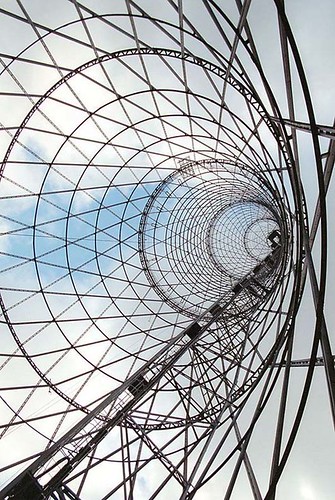
In 2011 a friend dragged me willingly along to the RA for an art exhibition called "Building the Revolution: Soviet art and architecture". I'd have to confess that I'm not naturally very cultured and probably wouldn't go near any art exhibition unless someone pushed me, but I enjoyed most of the art very much and was hopelessly smitten with photographs of Shuklov's Shabolovka Tower which is a bit like a massive pylon.
On Thursday 10 November I went to see Margy Kinmonth's new documentary film Revolution: New Art for a New World at its gala premiere (and Q&A) at the Curzon Mayfair. Tom Hollander (big fan, don't miss him in Travesties at the Apollo in early 2017) voiced the artist Kazimir Malevich.
I thought it was great - beautifully shot and in ways I'd not really seen before. The ending was gorgeous, the camera zooming in to what I think was a Malevich piece and wheeling round so that the last thing zoomed into was a black line which got bigger until it entirely took up the screen and so... fade to black. There was also a nicely unsettling use of a kind of split-screen with mirror images that was very effective when people were walking up or down stairs that I rather liked. One shot that particularly intrigued me made it look as if they were using an underwater camera but something in the Q&A made me realise that they might have just been pointing the camera into a very reflective puddle! Anyway I thought it was lovely.
One other comment that came up in the Q&A (with Kate Muir) was how lovely it was to see the art on such a massive 'canvas' of the big screen, it was certainly very immersive.
Edmund Jollife's music was great and the invigorating end credits music accompanies a nice list of all the artists discussed in the documentary and what happened to them - for a lot of them it was fairly horrendous and not at all a happy ending.
As well as paintings and sculptures we saw some fantastic footage of old films. Trams and trains featured quite a bit and we learned that trains would travel around Russia sharing art, books, ideas and screening films for everyone which is something I'd love to bring back! Imagine a cinema carriage on your commute home.
There were quite a few artists I'd never heard of who have produced gorgeous art which I've missed out on - I'd probably need to look up a list of who was mentioned in the film to get their names though.
I'd certainly never knowingly heard of Kazimir Malevich before my interest was piqued knowing that Tom Hollander was involved in the production, though I recognised some of his art as having been on display at the Royal Academy. My favourite piece of his, which wasn't on display in 2011, was his black square which is literally a black square on a white background (coincidentally there's a very similar emoji 🔳). You might think why on earth bother painting one of those (I think he painted several versions) and it's definitely one of those pieces of art that prompts those "I could paint that" comments, but I don't think anyone had done it before and it's now apparently worth about $20 million. It's quite arresting though, in any gallery setting, but in one of its displays it was boldly positioned in the room in the same place that would normally be reserved for a religious icon.
The documentary is being screened all over the place now and presumably at some point it will be on television - but I'd definitely recommend getting to see it on a bigger screen if you can. More details below.
See the documentary...
Watch this documentary in London: Saturday 19th and Sunday 20th November at the Curzon Mayfair, Tuesday 22nd November at Curzon Bloomsbury, Thursday 24 November at Curzon Soho, Saturday 26 November at the ICA (with a pre-film talk from the director Margy Kinmonth) and on Friday 2nd December 2016 at the Courtauld (Somerset House).
For all screenings in other UK cities and other countries see http://revolution.film/releasedates
...and some of the art itself
See the art next year: Revolution: Russian Art 1917-1932 (11 Feb to 17 April 2017) at the Royal Academy of Arts (RA) in London.
In 2011 a friend dragged me willingly along to the RA for an art exhibition called "Building the Revolution: Soviet art and architecture". I'd have to confess that I'm not naturally very cultured and probably wouldn't go near any art exhibition unless someone pushed me, but I enjoyed most of the art very much and was hopelessly smitten with photographs of Shuklov's Shabolovka Tower which is a bit like a massive pylon.
![]() |
| Dibs. |
On Thursday 10 November I went to see Margy Kinmonth's new documentary film Revolution: New Art for a New World at its gala premiere (and Q&A) at the Curzon Mayfair. Tom Hollander (big fan, don't miss him in Travesties at the Apollo in early 2017) voiced the artist Kazimir Malevich.
I thought it was great - beautifully shot and in ways I'd not really seen before. The ending was gorgeous, the camera zooming in to what I think was a Malevich piece and wheeling round so that the last thing zoomed into was a black line which got bigger until it entirely took up the screen and so... fade to black. There was also a nicely unsettling use of a kind of split-screen with mirror images that was very effective when people were walking up or down stairs that I rather liked. One shot that particularly intrigued me made it look as if they were using an underwater camera but something in the Q&A made me realise that they might have just been pointing the camera into a very reflective puddle! Anyway I thought it was lovely.
One other comment that came up in the Q&A (with Kate Muir) was how lovely it was to see the art on such a massive 'canvas' of the big screen, it was certainly very immersive.
Edmund Jollife's music was great and the invigorating end credits music accompanies a nice list of all the artists discussed in the documentary and what happened to them - for a lot of them it was fairly horrendous and not at all a happy ending.
As well as paintings and sculptures we saw some fantastic footage of old films. Trams and trains featured quite a bit and we learned that trains would travel around Russia sharing art, books, ideas and screening films for everyone which is something I'd love to bring back! Imagine a cinema carriage on your commute home.
There were quite a few artists I'd never heard of who have produced gorgeous art which I've missed out on - I'd probably need to look up a list of who was mentioned in the film to get their names though.
I'd certainly never knowingly heard of Kazimir Malevich before my interest was piqued knowing that Tom Hollander was involved in the production, though I recognised some of his art as having been on display at the Royal Academy. My favourite piece of his, which wasn't on display in 2011, was his black square which is literally a black square on a white background (coincidentally there's a very similar emoji 🔳). You might think why on earth bother painting one of those (I think he painted several versions) and it's definitely one of those pieces of art that prompts those "I could paint that" comments, but I don't think anyone had done it before and it's now apparently worth about $20 million. It's quite arresting though, in any gallery setting, but in one of its displays it was boldly positioned in the room in the same place that would normally be reserved for a religious icon.
The documentary is being screened all over the place now and presumably at some point it will be on television - but I'd definitely recommend getting to see it on a bigger screen if you can. More details below.
See the documentary...
Watch this documentary in London: Saturday 19th and Sunday 20th November at the Curzon Mayfair, Tuesday 22nd November at Curzon Bloomsbury, Thursday 24 November at Curzon Soho, Saturday 26 November at the ICA (with a pre-film talk from the director Margy Kinmonth) and on Friday 2nd December 2016 at the Courtauld (Somerset House).
For all screenings in other UK cities and other countries see http://revolution.film/releasedates
...and some of the art itself
See the art next year: Revolution: Russian Art 1917-1932 (11 Feb to 17 April 2017) at the Royal Academy of Arts (RA) in London.
Saturday, 5 November 2016
I've made a lantern with sticks of willow and strong tissue paper
Willow lantern-making workshop in Pinner - the final results, in a Pinner garden
Pinner is admittedly quite far from Blackheath (Charing Cross to Marylebone, fast train to Harrow on the Hill then 183 to Pinner works well but Pinner's also on the Metropolitan line, zone 5 (Watford trains stop there)) but if you happen to live a bit nearer than me then you might like to know that they sometimes do fun craft things at the Heath Robinson Museum which is in West House above Daisy's Cafe. This can be found at the far end (if you're coming from the station) of Pinner Memorial Park. The park is unlit at night so I recommend bringing a torch as the path is surrounded by trees so visibility is minimal. It's quite spooky!
On Thursday 3 Nov it was make your own willow lamp; these are lit either by a tealight or by a battery operated version.
Cocktails & Crafts West House 3rd November Willow lamps workshop @westhousepinner .@PinnerAssociat @VisitPinner pic.twitter.com/XMQ1Irzalg— Pinner Local (@PinnerLocal) October 31, 2016
I wish I'd taken a photo of the bushel of willow sticks tied up, it was quite impressive, possibly taller than me. You can buy them in stacks of about 250 (they're actually sold by weight rather than by number) from a variety of places, the class tutors recommended Somerset Willows (whose website is fascinating with lots of pictures of the process of growing, harvesting and preparing the willow sticks).
Dry willow sticks are still reasonably malleable in that you can, with a couple of firm thumbs, straighten them a bit and I think our tutors (the lovely Harinder and Kam who were fab and helpful) must have done quite a bit of pre-work on our ready-cut sticks so that we started the evening with some nice straight bits of willow.
The order of play is -
- Make a triangular platform for the tealight so that it can sit in the middle of the finished item
- At each corner add perpendicularly a willow stick so that a bit pokes out the bottom, raising the platform off the ground
- Towards the top add three smaller lateral sticks to provide a 'side' on which to stick the paper
- Add a sheet of wetted/glued paper to each side, add decoration, add another sheet of paper
- Quaff Prosecco and finger food, tidy up, let your lantern dry at home
The first thing we made is a strong triangular base on which the tealight will sit and once that's done it's tied to three sticks at each corner which are then brought to a point at the top. In the picture above you can see the white paper is attached on each side to a sort of A-frame - the bit at the bottom is the tealight stage and the smaller one at the top is added last (once the three vertical sticks are tethered at the top).
We used masking tape to construct the entire thing - it's much easier to tear of lots of two inch strips beforehand and stick them to a table. Then to bind the sticks together we split the masking tape bits lengthwise and folded the tape around the join, pushing in the tape to be as snug as possible. As masking tape is very flexible and 'flattenable' it's really good for this so we smoothed off our joins so they were quite neat. The trick is to leave a bit of stick sticking out then cut off the excess as it's much easier to join than trying to stick together two ends of wood.
Once we'd made the tealight platform we trimmed off the sticky-out bits from the bit the tealight sits on (but NOT the background triangle - for that we wait until the whole thing is constructed and has dried) and covered the ends with more masking tape.
The tealight is pretty light (ha!) even with a battery in so any platform will do.
Meze, prosecco & willow lantern-making. "Wet strength tissue paper" stage next + addition of decorative leaves! pic.twitter.com/Qa2eH082nx— Jo Brodie (@JoBrodie) November 3, 2016
Taking 3 longer willow sticks we lashed them perpendicularly to the tealight platform so that the platform was a few inches off the ground, then bound them at the top after deciding how tall we wanted the finished lamp to be. We spent a fair bit of time beforehand getting these to be reasonably straight and then did the perpendicular lashing.
The penultimate stage was to add to each side near (but not at) the top another shorter willow stick so that we had something to stick the tissue paper too.
Then we cut out some wet-strength tissue paper so that it was slightly larger than our A frame, and covered both sides in glue (50% water, 50% PVA glue) using the soft side of a dish-washing sponge dipped in the glue. This bit gets quite messy and a plastic-coated table cloth is a fantastic investment here! PVA glue peels off quite nicely from your hands once dried though (or you can just wash it off).
With care, place one sheet over one side of your lamp and cut so that it is just slightly larger. Stretch it taut over the frame (it will be even more taut when dry). This bit is quite fiddly and you need to roll it over the round willow stick but don't need it to fold back on itself inside (because you'll see all the joins once lit from within so the plan is to try and avoid any!). Same with the top and bottom, trimming away the excess and using the dipped spong add more glue where it contacts the willow. Repeat on all three sides.
We used leaves as decoration - again these are coated in glue on both sides and positioned on the tissue, then a second layer of tissue is added on top. Ideally try and get this taut from the get-go so that you minimise air bubbles and wrinkles, but good luck with that, especially if you've had a glass of Prosecco ;) I did my best!
Two sides of the nearly finished lamp showing leaves (once gently lit
you can see their colours, it doesn't look like a black silhouette).
Once you've put on six layers of tissue (two per side with a decoration in the middle, for which you can also regular coloured tissue paper as the colour of whatever you add will come through fine, even leaves) you can cover the masking tape with raffia fibre to finish things off.
Tidy up and wash your hands, walk home with a willow lamp and let it dry overnight. Then you can prune the ends with secateurs, tie the top (cover the masking tape) with raffia fibres, stick a battery in your battery-operated tealight and tell visitors how you came by your one-off piece of art :)
Mobile phone acting as torch!
The next event, at time of writing, is monoprinting on Mon 7 November and a Christmas print workshop on Thur 1 Dec, both £25 with glass of Prosecco and finger-food. It looks like they do crafts on the 1st Monday and Thursday of every month.
Post-script: it's possible to make willow lanterns at craft workshops all over the place but I'm particularly glad I picked this one in Pinner as it afforded me what turned out to be the last opportunity to see my dad alive. We spent a lovely day together on the Friday (4th) before I headed off to the Royal Albert Hall for Jurassic Park Live. He rang me on Saturday morning shortly before I published this and we had a chat before he headed off to the shops, but he collapsed and died rather suddenly on the way back. To be fair he'd have been delighted at the manner of his death though - quick and painless, but the lamp will always be a bittersweet reminder.
Subscribe to:
Comments (Atom)