Stuff that occurs to me

All of my 'how to' posts are tagged here. The most popular posts are about blocking and private accounts on Twitter, also the science communication jobs list. None of the science or medical information I might post to this blog should be taken as medical advice (I'm not medically trained).

Think of this blog as a sort of nursery for my half-baked ideas hence 'stuff that occurs to me'.

Contact: @JoBrodie Email: jo DOT brodie AT gmail DOT com

Science in London: The 2018/19 scientific society talks in London blog post

Showing posts with label health. Show all posts

Saturday, 2 December 2017

From 2014: When homeopaths go too far (collected vaccination statements)

This post was originally published on a Woto page but it seems that you can no longer log in with Twitter credentials so instead of trying to update it there I've migrated it here.

When homeopaths go too far
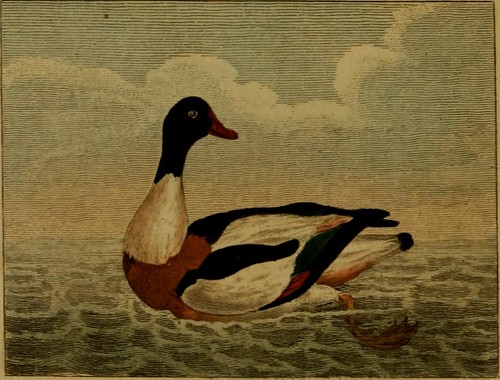
Image from page 205 of "Natural history of birds, fish, insects, and reptiles" (1808)

Image from page 205 of "Natural history of birds, fish, insects, and reptiles" (1808)

Reining in the homeopaths

Homeopathy is mostly harmless in that it contains no harmful ingredients (assuming it is prepared correctly, this was not the case for Nelsons in 2012). It is the medical equivalent of 'doing nothing'. But sometimes doing nothing can be a reasonable thing to do (eg 'watchful waiting') but sometimes it's a very bad idea. By taking homeopathic "medicine" people may be under the false impression that they are doing something useful, when instead they need real medicine.

There are a number of examples where organisations, both medical and homeopathic, have had to issue a statement to rein in some of the stranger notion that homeopaths have taken off and run with. Here are some of them.

The World Health Organisation made it clear in July 2014 that homeopathy is of no use for treating Ebola.


The Society of Homeopaths reminds its members, in June 2014, to be careful about the claims made about homeopathy in any marketing material...


The British Homeopathic Association, the Faculty of Homeopaths and the Society of Homeopaths agreed, in April 2013, that people should get their children vaccinated.

The BHA, British Homeopathic Association
"Vaccinations for infectious childhood diseases is currently a major news story. There is no evidence to suggest that the measles outbreak in Swansea or the fall-off in MMR vaccinations in the Totnes area are as a result of people choosing to use complementary medicines instead of conventional immunisation. However, we would like to state that on the issue of immunisation the BHA has for many years taken an unequivocal position.
In line with the Department of Health’s advice, the BHA recommends that immunisation should be carried out in the normal way using the conventional tested and approved vaccines."
Vaccinations statement British Homeopathic Association (date not given)

The FoH, Faculty of Homeopathy

"Vaccinations for infectious childhood diseases is currently a major news story.
There is no evidence to suggest that the current measles outbreak in Swansea or the fall-off in MMR vaccinations in the Totnes area are as a result of people choosing to use complementary medicines instead of conventional immunisation. However, as a responsible registering body for statutorily regulated healthcare professionals we again want to make clear our unequivocal and long-standing position on this issue.

In line with the Department of Health’s advice, the Faculty of Homeopathy recommends that in the case of infectious childhood diseases immunisation should be carried out in the normal way using the conventional tested and approved vaccines." 
copy of Vaccinations statement, archived on 21 Apr 2015  Faculty of Homeopaths (date not given)


The SoH, Society of Homeopaths
Philip Edmonds, chairman of the Society of Homeopaths said: "The Society does not endorse the use of homeopathic medicines as an alternative to vaccination for the prevention of serious infectious diseases and recommends that members of the public seek the advice of their GP, and/or relevant Department of Health guidelines, concerning vaccination and protection against disease."
Parents need to know homeopathy does not protect against measles, says MP The Guardian 15 April 2013

Public Health England, in February 2011, issued a statement about malaria and homeopathic remedies clarifying that
"The Health Protection Agency Advisory Committee on Malaria Prevention does not recommend relying on any herbal or homeopathic remedies for the prevention of malaria." Guidance: Malaria: Homeopathic Remedies Public Health England 1 February 2011 

Dr Peter Fisher, a homeopath, acknowledged in 2011 that homeopathy is of no use in preventing malaria and that fellow homeopaths do themselves no favour when pretending that it does

"So, yes I believe that eventually something, maybe descended from homeopathy, using the key techniques of homeopathy, will be accepted. I have to say I think the homeopathic community is in many ways its worst enemy, particularly in this country [UK]–we have people who make silly claims, frankly, who are not qualified and say things they really shouldn’t say, for instance, about preventing malaria.  That is potentially very dangerous and gets us a bad press."   An interview with Peter Fisher World of Homeopathy 4 July 2012
Useful as it is to have a senior homeopath acknowledge this @Blue_Wode has pointed me towards this nice quip (curated here on EBM-first, originally posted at Skeptico) from a skeptic, which makes a good point and references similar comments made by Dr Fisher in 2007.


The World Health Organisation made it clear in August 2009 that homeopathy is of no use for HIV, tuberculosis or malaria (or infant diarrhoea, or flu)

"People with conditions such as HIV, TB and malaria should not rely on homeopathic treatments, the World Health Organization has warned."
Homeopathy not a cure, says WHO BBC News 20 August 2009
"WHO also said that it does not recommend homoeopathy for treating diarrhoea in infants or flu. WHO experts, who have clearly criticised the use of treatments that have not been proved clinically and that are not evidence based, said that homoeopathy had “no place” in treatment of these five dangerous diseases."
WHO warns against using homoeopathy to treat serious diseases BMJ  24 August 2009

Dr Michael Dixon, Medical Director for the Prince's Foundation for Integrated Health also lent his support to the WHO's statement on homeopathy, agreeing that

"There is no place for homeopathy in treating serious illness such as HIV, TB, malaria and infant diarrhoea in developing countries. The Prince's Foundation for Integrated Health absolutely supports the recent statement by the World Health Organisation."
WHO warns against using homoeopathy to treat serious diseases (response) BMJ 11 September 2009

Summary
From this it's clear that both homeopathy organisations (in the UK at least) and medically qualified people agree that homeopathy is no substitute for vaccination, does not prevent or treat malaria and cannot treat HIV, TB, diarrhoea or flu.
I'm not aware of any homeopathic organisation which has acknowledged publicly that homeopathy is of no use in treating Ebola though. Which is a shame because, as @sciencebabe puts it bluntly, homeopathy contains #NoFuckingMedicine.

Apparently a team of homeopaths have taken themselves off to Liberia with a box of 'remedies'. It seems like they could cause problems in several ways:
  • giving people who may need actual medicine medicine that isn't actually medicine
  • generally getting in the way and making a nuisance of themselves
  • harming themselves by getting infected and increasing the workload of real doctors and support staff, coffinmakers etc.



Sunday, 18 December 2016

My experience of something like walking pneumonia - hospital admission and recovery

Homeopathy enthusiast Laurie J Willberg implies, rather overconfidently, that no-one has ever written a blog post about a pharma drug curing them.

https://twitter.com/LaurieJWillberg/status/808659218756763648

Here's one.

Certainly there are plenty of others. I encourage anyone who feels like doing so to write up a brief report of any medication they've taken that's solved any illness they've ever had. The nice thing is that homeopaths accept anecdotal evidence so a simple report of the nature of the illness and the medication taken will suffice ;)

Then let's have a blog carnival (not heard that term in years! Perhaps this is why.) and I'll link any posts I hear about below. Probably we can't include conditions like Type 1 diabetes and insulin treatment though because insulin doesn't cure someone of diabetes (they still have the condition) but it does allow people to stay alive in a way that they really might not have in the time before insulin injections were available. But 'cure' has a very specific and pedantic meaning, so... anyway here's the tale of my pharma-based recovery.

For balance I recommend reading Ben Goldacre's Big Pharma book which is critical of some of the systems and pressures that affect the way medicine works, including problems with trial design and reporting.

Jo's anecdotal report of being cured by pharma drugs

Overview
I didn't receive a formal diagnosis of whatever it was that made me ill but it seems quite possible that it was something very similar to 'walking pneumonia' which appeared to have both a viral and bacterial component (or possibly sequentially). I was really not well but I fully recovered in a few days with paracetamol, antibiotics (pharmacology), fluids (sort of pharmacology) and monitoring (good care) so here's my post explaining how paracetamol, clarithromycin and amoxicillin cured me of a chest infection helped along by nutrients like glucose and saline and measuring blood pressure, pulse and temperature to see how things were going.

That time I was a bit ill in January 2016On Thursday 7 January 2016 I woke up at 5am with a nasty cough which kept me awake on and off until 10am (at the time I didn't work on Thursdays so it was a day off anyway) and was annoying but no more than any other cough / chest infection.

I had breakfast and checked emails etc and pottered around for a bit but noticed that I felt a bit spacy and not quite right, and then I noticed my heart rate - it was 100. My resting pulse varies between 62 and 72 but I wouldn't have minded even 80 or 90, but 100 seemed a bit much. I went to sleep for a couple of hours to see if that helped but woke up and felt worse and pulse was up to 120. A shower didn't help either and I realised that it was getting faster, to the point that it was difficult to count the beats. Plus I felt not at all well and had found the exertion of getting in and out of the shower quite hard, normally it's not exerting at all.

By the time I'd got a taxi sorted to take me to A&E (it wasn't quite a blue-light ambulance situation, though in retrospect perhaps it should have been) I was quite breathless and finding it difficult to talk. Once I got to A&E I felt quite panicky, a sort of dawning realisation that I can't be very well if I'm in A&E and began to get tingling in my arms and hands (not legs or feet though). Things moved very quickly after I was triaged by a lovely person who tried to relax me, despite telling me I was in 'high AF' (atrial fibrillation where the heart rhythm goes awry and the sequence of events that brings blood into the heart and pumps it out again gets out of sequence, my heart was going so fast it was kind of missing steps out!) and I was put on an ECG machine and hooked up to blood pressure (184/something or other so very high - it went up to over 200 before dropping later). I didn't have any chest or left-arm pain - they asked, and I said my chest felt a bit exhausted, but no crushing or burning sensations.

Lovely nurse and doctor came and had a chat and asked me lots of questions about my medical history (uncomplicated picture of health) and I noticed that everyone seemed to perk up a bit when I said I'd never smoked. I had been put on fluids and must have been feeling better because at that point I asked the doctor about that - it seemed counterintuitive to me that if my pressure was high, then introducing more fluids into the situation seemed like a bad idea. It apparently doesn't work like that and he said I was quite dehydrated, which surprised me no end as I'd had a pint of milk and a 500ml bottle of water earlier in the day. But when you're fighting an infection your fluid requirements might be a bit higher than normal and to be honest I'd probably panted quite a lot out trying to breathe / cool down!

Possibly my use of the word 'tachycardia' rather than fast heart-rate prompted the doctor to ask if I had a medical background. I explained that I didn't but had worked in the area so understood a fair bit (though I'm obviously not medically trained). This made things quite interesting as I got to hear a bit more about the tests they were doing, and the worst one was coming up.

If you are ever told you'll be having blood drawn from the artery in your wrist (an ABG [arterial blood gases] test) and they offer you a local anaesthetic, accept that anaesthetic. I thought having a line for a drip put in the vein my front elbow (is there a word for that, medical or otherwise... crook?) was uncomfortable. My veins are quite deep so it was quite an effort for people to get bloods out of me for the morning tests, and to get fluids in. I was a pin cushion of bruises.

Anyway after a bit of jabbing they got some blood out of the artery but unfortunately the machine stopped working so they had to do it again. I insisted they give the other wrist a go to let the first recover (by this time is was after 9pm so I'd been there for four hours) and didn't have anaesthetic there either. At one point the needle contacted my radial nerve and I must have let out a bit of a yelp as that was a pretty acute and unpleasant experience - it felt as if molten lava was flowing across my hand. For a week afterwards every time I put on a jumper and stretched out my arm I got a shooting pain along the nerve but thankfully nerves recover and that went quite quickly.

The test lets them infer what any bacteria might be doing, presumably I might have been at risk of having bacteria in the blood (or worse, bacteria in the blood that weren't responding to medication) but the results were only a little higher than normal and not a cause for alarm, at least that's my understanding of it. The doctor also mentioned that I'd been cyanotic when I arrived (blue around the edges, not a good sign if it comes on suddenly - I'd not noticed it) but by now I was 'back in sinus rhythm' which is good news in my book.

Two days later everything had returned to 'higher than normal' rather than 'blimey, high' and being out of danger I was allowed to go home and continue getting things back to normal myself, with the medication highlighted above. I set myself up a list with timings and the medications I should take at times throughout the day and followed it religiously, also monitoring my temperature which remained normal. I didn't overexert myself (another doctor cautioned against treating myself as if I was much better before I really was, to avoid some sort of post-viral fatigue thing - I don't know much about that but cheerfully followed the advice to chill out).

Without a formal diagnosis I can't prove what I had, or how seriously ill I was. For example I don't think I had sepsis but perhaps if I'd not gone to hospital promptly things might have headed in that direction. If you're a doctor reading and can clarify anything I've misunderstood I'm happy to hear about it. I was relieved to recover and am happy to write this, and indeed any, post highlighting that homeopathy is a load of twaddle and won't cure anyone of anything.

Blog carnival placemarker for others' anecdotal cures
• your blog post here...


Wednesday, 3 December 2014

Money (£500k) for charities from NHS England, to do self-care related stuff

NHS England has a pot of money that looks like it could be put to an interesting use

NHS England has launched the Realising the Value Programme, a new initiative which will empower people and communities to take more control of their health.

Through this initiative, NHS England will award a grant of up to £500,000 to a charity or not for profit organisation (or consortium) to identify evidence-based approaches to self-care. This programme will also support the commissioning and spread of such approaches, across local communities, and in the NHS, to empower people to take an active role in their health and care.

Interested organisations have until 9 January 2015 to apply for money from the Realising the Value programme. NHS England will be hosting and event on 8 December, in London, where organsations can come and find out more about the programme and submitting an application.

Sunday, 15 December 2013

Public health, science, animal health and consumer-affairs related newsletters from European Commission

I've just signed up to find out what some mailing lists from the European Commission are like, so this is less an advert for them and more of an alert in case others haven't come across them. A friend has been forwarding items to me which were interesting enough for me to find out more.

The link to sign up is below, you need to register (free) and then mailing lists will be yours. Once you're taken to the page of options the button to subscribe is actually labelled 'default language', which took me by surprise (I assumed I was auto-subscribed to everything, happily no).

https://ec.europa.eu/coreservices/mailing/index.cfm?form=register&serviceid=1

And these are the ones you can subscribe to.

What's new on DG Health & Consumers website
Daily compilation of all new documents published on the site of the Health and Consumers Directorate-General

Health and Consumer Voice Newsletter
Newsletter on food safety, health and consumer protection from the European Commission's Health and Consumers DG

What's new about TRACES
Monthly news about TRACES development in the EU and around the world

Newsletter Scientific Committees
Newsletter of the European Commission Scientific Committees.

Public Health
E-mail update on latest news and developments on public health.

Consumers
E-mail update on latest news and developments on consumer affairs.

Food and Feed Safety
E-mail update on latest news and developments on food and feed safety.

Animal Health and Welfare
E-mail update on latest news and developments on animal health and welfare.

Health-EU Newsletter (CS)
Health-EU Portal Newsletter - Czech version (CS)

Health-EU Newsletter (DA)
Health-EU Portal Newsletter - Danish version (DA)

Health-EU Newsletter (DE)
Health-EU Portal Newsletter - German version (DE)

Health-EU Newsletter (EL)
Health-EU Portal Newsletter - Greek version (EL)

Health-EU Newsletter (ES)
Health-EU Portal Newsletter - Spanish version (ES)

Health-EU Newsletter (ET)
Health-EU Portal Newsletter - Estonian version (ET)

Health-EU Newsletter (FI)
Health-EU Portal Newsletter - Finnish version (FI)

Health-EU Newsletter (FR)
Health-EU Portal Newsletter - French version (FR)

Health-EU Newsletter (HU)
Health-EU Portal Newsletter - Hungarian version (HU)

Health-EU Newsletter (IT)
Health-EU Portal Newsletter - Italian version (IT)

Health-EU Newsletter (LT)
Health-EU Portal Newsletter - Lithuanian version (LT)

Health-EU Newsletter (LV)
Health-EU Portal Newsletter - Latvian version (LV)

Health-EU Newsletter (MT)
Health-EU Portal Newsletter - Maltese version (MT)

Health-EU Newsletter (NL)
Health-EU Portal Newsletter - Dutch version (NL)

Health-EU Newsletter (PL)
Health-EU Portal Newsletter - Polish version (PL)

Health-EU Newsletter (PT)
Health-EU Portal Newsletter - Portugese version (PT)

Health-EU Newsletter (SL)
Health-EU Portal Newsletter - Slovenian version (SL)

Health-EU Newsletter (SK)
Health-EU Portal Newsletter - Slovak version (SK)

Health-EU Newsletter (SV)
Health-EU Portal Newsletter - Swedish version (SV)

Health-EU Newsletter (BG)
Health-EU Portal Newsletter - Bulgarian version (BG)

Health-EU Newsletter (RO)
Health-EU Portal Newsletter - Romanian version (RO)

Health-EU Newsletter (EN)
Merger of Health-EU Newsletter EN and Scientific Committees Newsletter

Health-EU Newsletter (HR-Croatian)
Health-EU Portal Newsletter - Croatian (HR)

Thursday, 30 August 2012

I find Atos's attitude to disability a bit disturbing

The Storify of the tweets - published (duplicated) here because I think more people will see it on Google Blogger. It might take a wee while to load.

Tuesday, 15 December 2009

Collecting clinical database information - your help needed :)

What with krunchd.com disappearing [edit: it has since recovered] I'm storing some useful health / medical / drug databases here for now - it was a great resource for taking a bunch of links (up to 30) and giving you a single URL for sharing (each page could be viewed using a small drop-down menu).

Anyway, as I don't come from a library background (I only recently heard of the acronym 'PICO') I may well have missed some of the important databases. But I do work IN a library, so I don't want to miss any really!

Some come from memory, some from Trisha Greenhalgh's 'How to read a paper', and some from suggestions on the CLIN-LIB mailing list at Jiscmail. Some of them I'd not heard of / haven't used.

What have I missed? (I'll remember some myself the minute I press 'publish').

EDIT 20.12.09
Added BMJ Clinical Evidence.
See also Spineless Blog's '10 websites to help you keep up to date with scholarly journal contents' http://hwlibrary.wordpress.com/2009/10/21/10-websites-to-help-you-keep-up-to-date-with-scholarly-journal-contents/ thanks to Zeno001 for highlighting this one.

EDIT 22.06.10
Added Map of Medicine.