Stuff that occurs to me

All of my 'how to' posts are tagged here. The most popular posts are about blocking and private accounts on Twitter, also the science communication jobs list. None of the science or medical information I might post to this blog should be taken as medical advice (I'm not medically trained).

Think of this blog as a sort of nursery for my half-baked ideas hence 'stuff that occurs to me'.

Contact: @JoBrodie Email: jo DOT brodie AT gmail DOT com

Science in London: The 2018/19 scientific society talks in London blog post

Thursday, 14 March 2013

When did we start photographing bits of things? Or am I noticing something that isn't new?

I might be wrong (could be confirmation bias) but I get the impression that there's been an increase in people taking photographs of bits of things in addition to (perhaps in preference to) photographs of the whole thing, ie as an accent, or colour, or to evoke a mood - Instagram is full of it, and I am certainly guilty of it too. Though I do think the photos are pretty.

(Edit: I'm not really talking about recording things for scientific purposes, which is certainly an example of people focusing closely on one aspect of a thing and also the thing in context, just about people taking snaps that don't encompass the full item, and looking at just an aspect of it).

Until I've worked out how to embed an Instagram pic I'll have to make do with a link, so here's one I took of the inside of a British Gas envelope - I think it's probably pretty obvious to most British Gas customers what it is http://instagram.com/p/ipfmI/

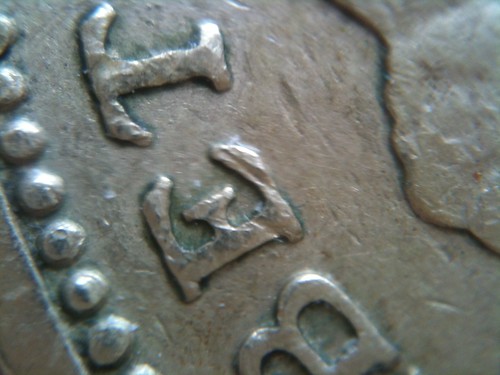
Note that this wasn't a macro photography shot, but I've been doing a fair bit of that as well by using a small drop of water on my iPhone - you can get some quite impressive shots - here's a close-up I took of a pound coin.

£1 coin macro


Is this shift that I think I'm perceiving a consequence of changes in the capability of cameras - easier to get close ups, more options with different kinds of lenses, with digital 'film' maybe people might be more confident about trying things that don't work etc., without worrying about the expense of wasting resources, or is it more to do with the way we look at stuff?

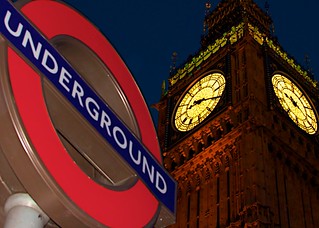
To me these evoke 'London'...

London underground

London Eye

...every bit as much as larger shots of London vistas do

London, England

I know that people painted landscape scenes as well as studies on individual flowers so I'm not claiming that no-one has ever looked at things at different levels before, but I've certainly started noticing it a lot more. When I 'see' London I do see it all at once like this but even if I don't concentrate on the little fiddly bits (the pattern on Big Ben's tower, the little wiggly bits on the spire) if I see them separately I immediately recognise them as part of my landscape.

Is it a change in the way we think about how we look at stuff (perhaps we are becoming more artistic!) or a change in technology, or just me spotting a few instances of it and then just noticing it all the time?

Monday, 11 March 2013

Adiphene weight loss pills - do they need, or have, MHRA approval?

Here's what the CAP code (what the Advertising Standards Authority uses to determine if an ad breaches guidelines) says, in relation to Sports supplements: Medicinal claims:
"We have previously been informed by the MHRA [the UK's Medicine & Healthcare products Regulatory Authority, it's a bit like the FDA] that all products containing citrus aurantium, white willow bark, chromium picolinate, cyanotis vaga, tribulus terrestris and variations of androstenediol are medicinal. Marketers should contact the MHRA if their products contain any of those ingredients before selling the product or preparing marketing campaigns for it. "
 Here's what CAP says in its Slimming guidelines for the press:
"8. Claims that products can, for example, boost metabolism, inhibit dietary fat absorption, melt fat, soak up fat, break down fat, suppress appetite, block fat etc,are almost always unproven and are likely to break the Code and may also be medicinal claims. Furtheradvice can be sought from the MHRA (www.mhra.gov.uk).
CAP has seen no evidence thatproducts containing the following can assist in weight loss; Aminopyline, Citrus Aurantia, Chitosan, Chromium Picolinate, CLA, Garcinia Cambogia, Guarana Extract, L-Carnitine, Lecithin, Ribose."
I don't know if these guidelines relate only to sports supplements and discussions in the press and mean that marketers are free to make these claims about different products and not in the press - I doubt it though.

Assuming that these guidelines do affect all marketers... it would seem, then, that the CAP guidelines are recommending that anyone selling a product containing chromium picolinate needs to check with the MHRA before marketing it (in the UK), while also mentioning that there doesn't seem to be any good evidence that chromium picolinate helps in weight loss.

The guidelines also highlight that claiming that implying that your product can boost metabolism or suppress appetite etc is 'likely to break the Code' and that such statements 'may also be medicinal claims' - ie, it's probably necessary to check with the MHRA.

So it seems that if your product contains chromium picolinate and / or makes claims about boosting metabolism etc then you might need MHRA approval before marketing that product.

Adiphene is a new (to me) weight loss product, from RDK Holdings (the same people who make Phen375 weight loss pills) and it contains chromium picolinate and makes precisely the claims on its website that the MHRA and CAP are a bit uncomfortable about. I have been trying to find out if permission from the MHRA is needed (in the first place) or if it has already been granted for Adiphene to be marketed in the UK (it's entirely possible that it has been given).

A website promoting another slimming pill, Proactol, has a page with the question "Is proactol plus approved by the MHRA?" however it doesn't appear that they've actually answered that question anywhere on the page... http://proactolplus-pills.co.uk/is-proactol-plus-approved-by-mhra

I didn't find any mention on the MHRA's pages for Proactol or Adiphene though I did find mentions for the Over The Counter weight loss pills 'Alli' (orlistat) and the prescription version Xenical. The MHRA also has an interesting list of herbal slimming products to avoid that have been found to contain the prescription-only medicine sibutramine (reductil).

Adiphene's parent website is probably based in the USA so I expect what it says on its own pages is its own business, although I'm not sure where the line needs to be drawn when the product is being shipped around the world (the site lets you tweak it to give you the prices in UK pounds). Also, the site is being promoted by MoreNiche affiliate marketers some of whom will (presumably) be promoting the product's sale to people in Britain.

(1) Adiphene official website: http://adiphene.com/en/ingredients.html
(2) Examples of affiliate marketers' UK (apparently) sites promoting Adiphene
  • http://www.dietpillsbuy.co.uk/buy-adiphene-diet-pills/ - mentions boosting metabolism
  • http://www.dietslimmingpills.org.uk/adiphene-review - mentions chromium picolinate, appetite suppression
  • http://www.fat-burners-uk.co.uk/adiphene-natural-adipex-alternative/ - mentions chromium picolinate, inhibition of fat absorption
Further reading
Nuratrim on the naughty step for failing to provide evidence for their weight loss supplements (23 August 2012) - the ASA added Nuropharm Ltd to their list of non-compliant online advertisers.


Sunday, 10 March 2013

I have never seen this strategy used in 'Who wants to be a millionaire' and have often wondered why

In the ITV gameshow WWTBAM contestants are asked a series of questions and given four options to choose from for each - one is the right answer and three are wrong.

If the contestant doesn't know the answer, and can't confidently work it out for themselves they have three 'lifelines' to help them: phone a friend, 50-50 (where the computer removes two wrong answers) and ask the audience.

The 50:50 one is simple enough and if you've formed an opinion about one answer being probably right and it still remains after the computer's deleted the two wrong answers then you might be brave and choose it as the answer.

With 'phone a friend' people tend to read the question to their friend on the phone and then read out the available answers. This seems an odd way to go about it and is a bit inefficient. I'd suggest either reading out the question and waiting five seconds to see if your pal is able to volunteer the right answer before prompting them (this lets you know how confident they are in their answer, though not how correct they are of course).

A better way would be to dispense with reading the question as it's written and just read out the minimum - ie the most important bits of information. So instead of "What is the capital of France?" I'd say "France - capital city?" - although I imagine lots of people watching in the studio, the dramatic music and the lighting might make me feel very different if I was actually there of course.

But the lifeline that intrigues me the most is ask the audience - if you have no idea what the answer is then submitting to the wisdom (hopefully) of crowds seems very sensible. However while you might not know what the answer is, you might know what the answer isn't.

If you don't know what the capital of Zambia is then you might struggle to decide among three of the names below, but you might be fairly sure that 'Accrington' is unlikely to be a candidate (no guarantees, obviously so perhaps this isn't a perfect example!).

a) Abuja b) Accrington c) Lusaka d) Banjul

I've never seen a contestant 'direct' the audience, asking that if they don't know what the answers is to vote for b) Accrington (relying on the fact that Accrington isn't likely to be the answer of course).

It might be that 60% of the audience has no idea what the capital of Zambia is, so rather than having them randomly guess one of the four why not prune them out of the deliberations by re-routeing them to an assumed false option. The remaining three options are now being considered by members of the audience who either do know the answer or think they know the answer. I can't help thinking that this could increase the odds slightly.

Maybe contestants aren't allowed to offer guidance to the audience, and maybe the audience wouldn't take kindly to being instructed in this way and might sabotage the outcome ;)

But whenever I've seen it I've wondered about this...


Currying favour with Google etc through sneaky use of Amazon's Mechanical Turk and ShortTask

After being alerted to the existence of Amazon's Mechanical Turk and ShortTask (both are websites which let you pay people to do small tasks, ie crowdsourcing) I occasionally take a look there to see what drivel people are being paid to do.

Generally you can earn around 5 cents for doing one small task such as leaving a positive comment on a YouTube video or liking a Facebook page.

Here are some of the current ones on ShortTask - I could only find twenty tasks, I wonder if that's because I'm not logged in or because its appeal is becoming more 
  • This one asks you to search for breast growth mco on Google and then report back the name of the website after spending a minimum of 40 seconds on the site.
  • Here's one that will pay you to flag a video on a YouTube as spam. Seems a bit harsh.
Whereas over at Amazon's Mechanical Turk...
  • Possibly the oddest writing gig I've seen - this one will pay $5 for you to compose and publish ten tweets on the general topic of writing, which can include freelance tips and grammar tips. According to the 'project pay' information this works out at 50c per tweet and roughly 0.02c per word - probably not that in line with the National Union of Journalists' recommendations for payscales.
  • There's a rather nicely designed website at 'phlogistoncarnival' however they offer speechwriting (OK) but also the writing of papers (hmm). I suspect their 'AI teacher' page is a bit of a cunning ruse designed to boost their own dictionary / thesaurus - http://phlogistoncarnival.com/AIteacher.php - for their MTurk task they want you to tweet about them from a Twitter or say something on a Facebook account that is not typically used to post commercial tweets or Facebook ads.
  • Sticking with the blogging theme, this one wants you to find blogs about travel and their contact email address. No idea why but it put me in mind of those annoying people that email me periodically asking if they can (a) write a guest post for me or (b) sneak a link to some iffy company or resource page into one of my blog posts. I wonder if there's a complementary task in which people are paid to send a template email to people who write travel blogs asking them if they'll advertise your travel site. Funnily enough I have received one of these requests myself in the past.


Saturday, 9 March 2013

"Adequately controlled" - this means different things in different contexts

I am currently looking at the CAP code guidance on healthcare therapies and evidence (CAP code is what the Advertising Standards Authority use to determine if an advert is misleading or not) and spotted the phrase adequately controlled (and the concept of control) cropping up a couple of times in this bit:
"Evidence submitted for health claims should normally include at least one adequately controlled experimental human study, but an adequately controlled observational human study might be sufficient in some circumstances.

If the body of evidence does not include at least one adequately controlled experimental human study, the ASA will usually need to be convinced that the data supplied is sufficiently compelling.

A convincing rationale would need to be provided as to why commissioning an experimental human study would be impractical.

‘Before and after’ studies with little or no control, studies without human subjects, self-assessment studies and anecdotal evidence are unlikely to be considered acceptable as sole support for a “new” claim relating to physiological or psychological action or function in humans.
On their own, outcome studies or audits may not be sufficient as a rigorous basis for claims as there is little way of controlling for bias or for other influences that may have a bearing on the results. In addition, the claims should be able to be applied across the population the evidence should therefore reflect the targeted consumer base, whether general or specific."
To some alternative therapists (especially those who aren't familiar with scientific or medical terminology) the term 'adequately controlled' could mean something very different from its intended meaning here. The phrase could mean 'well run' or 'within expected limits' (as in 'her diabetes is adequately controlled' or 'his glucose levels are adequately controlled') or, as it means here, that an appropriate comparison was made between people getting the test treatment and people getting regular treatment or no treatment (the control group).

If people do misunderstand its meaning, how much of a problem in communication does it cause - if any? 

The last paragraph in the quote does go some way to explaining how the term is being used but I'm not sure that its meaning is all that clear. Even 'outcome studies' might not mean much to everyone - after all you do a study... it has an outcome ;)