Stuff that occurs to me

All of my 'how to' posts are tagged here. The most popular posts are about blocking and private accounts on Twitter, also the science communication jobs list. None of the science or medical information I might post to this blog should be taken as medical advice (I'm not medically trained).

Think of this blog as a sort of nursery for my half-baked ideas hence 'stuff that occurs to me'.

Contact: @JoBrodie Email: jo DOT brodie AT gmail DOT com

Science in London: The 2018/19 scientific society talks in London blog post

Showing posts with label alternative medicine - weight loss. Show all posts

Sunday, 27 July 2014

I've no idea which Raspberry Ketones weight loss products can legally be sold in the UK

Short version: (1) Bottles of pills containing raspberry ketones may be being sold illegally in the UK because they are an unauthorised novel food whose safety hasn't been assessed properly. (2) Raspberry ketones are a waste of money as a weight loss supplement (no good evidence they work, any weight lost is solely due to changes in diet / exercise.

Full post: A couple of weeks ago I learned from BBC1's Watchdog that it might actually be illegal for companies to sell Raspberry Ketone products in the UK (if you've bought some online with a credit or debit card you may be able to get your money back - there's no evidence they help with weight loss), and tweeted the following:


Were I sending that tweet now I'd probably add a couple of caveats: (1) I don't know what sort of crime it is (unfair trading? mislabelling?) or what the punishment would be (fine more likely than jail I'd think) and (2) it seems to depend on the type of product on sale.

In October last year the Food Standards Agency (FSA) opened up a consultation with people who sell raspberry ketone products and asked for information about the products. One thing the FSA were keen to find was evidence that these products had been widely consumed in the UK since before 1997.
Under Regulation (EC) 258/97, novel foods and food ingredients may only be marketed if they have been evaluated and authorised under the procedures defined in the regulation. A novel food or ingredient is defined as one that was not consumed to a significant degree in the European Community before 15 May 1997. Raspberry ketones have not been authorised under this regulation.

The Agency is not aware of any evidence for a history of consumption of raspberry ketones anywhere in the EU before May 1997 and we are therefore minded to view it to be a novel food, which cannot be sold legally until it has been formally authorised. As such, any companies who wish to market foods containing raspberry ketones in the EU will need to apply for an authorisation under Regulation (EC) 258/97. Such an authorisation would require the submission of a dossier to one of the 28 EU Member States, demonstrating that the ingredient (a) does not present a risk to the consumer; (b) does not mislead the consumer; and (c) is not nutritionally disadvantageous compared with other foods that it might replace in the diet.
Source: Request for information from businesses: Raspberry ketones FSA 24 October 2013 [emphasis added by me]

In March they published their findings and I have to say I'm still a bit confused. Very reasonably the FSA makes a distinction between different types of raspberry ketone products noting that some can be sold without problem, but that some need to have some sort of authorisation.

Some raspberry ketones are fine...

"We received and reviewed information from a small number of interested parties. We have confirmed that some raspberry fruit extracts, which may or not be marketed as “raspberry ketones”, are outside the definition of a novel food, based on conclusions reached in other EU Member States. This is limited to extracts prepared using water or 20% ethanol (1:4 ethanol:water). These extracts therefore do not require authorisation as novel foods."
Source: Raspberry ketones (letter to interested parties) FSA 12 March 2014 [emphasis added by me]

but some are not...

"We have not received any other information that provides evidence of a history of significant consumption of raspberry ketones prior to 15 May 1997. We therefore remain of the view that raspberry ketones, other than the extracts mentioned above, are novel and fall within the scope of the EU legislation on novel foods
Under Regulation (EC) 258/97, novel foods and food ingredients may only be legally marketed in the EU if they have been evaluated and authorised under the procedures defined in the regulation, raspberry ketones have not undergone this process. Any companies who wish to market a novel food in the EU will need to gain an EU authorisation under Regulation (EC) 258/97. Such an authorisation would require the submission of a dossier to one of the 28 EU member states, demonstrating that the product a) does not present a risk to the consumer; b) does not mislead the consumer; and c) is not nutritionally disadvantageous compared with other foods that it might replace in the diet." Source: as above, 12 March 2014 [emphasis added by me]

But wait...

"This advice does not apply to the use of the chemical substance “Raspberry ketone” (4-(p-hydroxyphenyl)butan-2-one) as a flavouring. This compound is a permitted flavouring substance in the EU and small amounts of raspberry ketone can be used as a flavouring, in compliance with the EU Flavourings Regulation (1334/2008/EC). If used for any other purpose it would have to comply with the novel foods regulation." Source: as above, 12 March 2014 [emphasis added by me]

There seem to be three different classes of raspberry ketones
(1) Those that are a particular kind of water / ethanol extract
(2) Naughty raspberry ketones that can't be sold without authorisation
(3) The butan-2-one chemical compound

If you're buying raspberry ketones online or from Holland & Barrett (really, really don't bother, try and get your money back, there's no evidence that they can do anything for weight loss) then how do consumers know whether the product is being sold legally (though uselessly), or illegally as a novel food of unknown safety (also uselessly).

I had a look at the online Holland and Barrett shop page for Raspberry Ketones and didn't find any information about EU authorisation.

Similarly I've no idea if the raspberry ketones on offer from Groupon are being marketed legally or not. I've asked them to clarify.

Personally I don't think anyone should be wasting money on these products at all but if you do want to, how do you know which ones are "OK" to buy? There seems to be insufficient information for consumers.


Wednesday, 1 January 2014

Wasted money buying weight loss pills online? Try and get your money back and report to Action Fraud

This post is modified from one that appeared as part of an earlier post and is aimed at people in the UK.

Weight loss pills and supplements are advertised in newspapers (though I think some of them are cottoning on to the fact that they don't really work), magazines, television programmes and adverts, dedicated websites, pop-ups on other people's websites, sites like Instagram, Twitter and on YouTube. If you've bought some and wish you hadn't (check your credit card / debit card bill as there may be ongoing charges added) then here are some suggestions for what you might be able to do.

1. Try and get your money back
If you've bought pills (or anything online) with a debit or credit card then you may be able to get your money back. Have a look at the information on Section 75 and Chargeback at Martin Lewis' Money Saving Expert page on Visa, Mastercard & Amex Chargeback: protection for debit card purchases. I think it only works if the cost was over £100 though but worth checking.


2a. Report the website to the Advertising Standards Authority (ASA)
How to complain about misleading marketing / advertising (as of 2011 websites are included) - http://asa.org.uk/Consumers/How-to-complain.aspx

Have a look at what the Committee of Advertising Practice (they produce the guidelines that the ASA uses to determine if marketing material on websites or leaflets is OK) has to say about various types of weight loss advertising too.

See also UK Government information on the Advertising Standards Authority 


2b. Report to Trading Standards 
From Trading Standards' website - Trading Standards tips for successful New Year's resolutions
• The New Year may seem like a perfect time to get back into those skinny jeans. Trading Standards is warning consumers to be sceptical of fad diets, misleading statements and exaggerated promises made by companiespromising to have a “miracle cure”. Not only will they fail to lighten anything but your wallet, many products may be untested and could be extremely unsafe.
• Trading Standards warns consumers to be wary of internet sellers or small ads offering weight loss supplements such as herbal remedies which promise an easy route to weightloss.
•  Consumers have reported falling foul of internet sites where they thought they were subscribingto a free slimming pill trial only to discover they were tied into expensive contracts.
The first port of call was previously Consumer Direct however Citizen's Advice took over this role in April 2012, see their Advice Guide.

If you know the operating address of the company then contact the relevant local Trading Standards office, you can do this from the UK Government's Trading Standards web portal. Note that the UK office address may not be the company's actual address (might be outside of the UK).

There's some good background advice in this This is Money article (note that it's from 2009 so some of the links won't work and Consumer Direct aren't involved anymore) - "Help! I've been caught by diet pills scam".

See also "Warning issued over illegal 'fat burning' chemical" (September 2013) from the Trading Standards Institute.


2c. Report it to Action Fraud
If you have lost money in buying unevidenced weight loss pills you can report this to Action Fraud, who have this to say on Miracle Health Scams:

"Miracle health scams can include fake ‘miracle’ cures and weight loss products as well as bogus online pharmacies.

It is unlikely that such products have been properly tested or that there is any proof that they are medically effective. Some of these products may even be harmful.

Advertising for miracle health cures often include fake testimonials from apparently satisfied customers, have unproven claims about the product’s effectiveness, make false claims about clinical tests and have worthless ‘money back’ guarantees."


Tis the season of weight loss pills, and other online pills, for which there is generally not very good evidence. 

Most are probably fairly harmless and just ineffective (waste of money, and a hassle to get a refund), but some aren't harmless and the sorts of risks can include:

• the pills do contain the ingredients listed but the pills should really only be used under medical supervision
• the pills don't contain the ingredients listed but some other (possibly prescription-only) medicine, perhaps one that has been taken off the market

To be fair, very few are actually lethal. Do watch out for the fat burning one above though.

Fairly often the pills will contain a variety of herbal ingredients and minerals but no evidence is given that the pills have been tested as a combination of those ingredients. If evidence is offered only for the individual ingredients (often small studies in animals or humans) then be wary as things can behave quite differently in combination - and if the pills haven't been tested in the format that they're being sold in then the company cannot reasonably make any claims about them.

I've written previously about the tactics of review sites* and the concept of article spinning** and this means that I sometimes get blog comments from people who are annoyed at having paid money for online pills - hope this updated post helps.


*they're often not actually review sites but provide a link to a merchant site from which you can buy the product, while giving the review site a small percentage of the sale - this is perfectly legal by the way, and often used to really good effect by some charitable organisations (eg with selling books through Amazon) it's just helpful to be aware of it.

**taking a block of text, changing a few words, and publishing this in the hope of fooling Google that it's a fresh new website - this has let people 'flood' the internet with similar websites all promoting the same product, though Google has begun penalising some of the sites.


Monday, 11 March 2013

Adiphene weight loss pills - do they need, or have, MHRA approval?

Here's what the CAP code (what the Advertising Standards Authority uses to determine if an ad breaches guidelines) says, in relation to Sports supplements: Medicinal claims:
"We have previously been informed by the MHRA [the UK's Medicine & Healthcare products Regulatory Authority, it's a bit like the FDA] that all products containing citrus aurantium, white willow bark, chromium picolinate, cyanotis vaga, tribulus terrestris and variations of androstenediol are medicinal. Marketers should contact the MHRA if their products contain any of those ingredients before selling the product or preparing marketing campaigns for it. "
 Here's what CAP says in its Slimming guidelines for the press:
"8. Claims that products can, for example, boost metabolism, inhibit dietary fat absorption, melt fat, soak up fat, break down fat, suppress appetite, block fat etc,are almost always unproven and are likely to break the Code and may also be medicinal claims. Furtheradvice can be sought from the MHRA (www.mhra.gov.uk).
CAP has seen no evidence thatproducts containing the following can assist in weight loss; Aminopyline, Citrus Aurantia, Chitosan, Chromium Picolinate, CLA, Garcinia Cambogia, Guarana Extract, L-Carnitine, Lecithin, Ribose."
I don't know if these guidelines relate only to sports supplements and discussions in the press and mean that marketers are free to make these claims about different products and not in the press - I doubt it though.

Assuming that these guidelines do affect all marketers... it would seem, then, that the CAP guidelines are recommending that anyone selling a product containing chromium picolinate needs to check with the MHRA before marketing it (in the UK), while also mentioning that there doesn't seem to be any good evidence that chromium picolinate helps in weight loss.

The guidelines also highlight that claiming that implying that your product can boost metabolism or suppress appetite etc is 'likely to break the Code' and that such statements 'may also be medicinal claims' - ie, it's probably necessary to check with the MHRA.

So it seems that if your product contains chromium picolinate and / or makes claims about boosting metabolism etc then you might need MHRA approval before marketing that product.

Adiphene is a new (to me) weight loss product, from RDK Holdings (the same people who make Phen375 weight loss pills) and it contains chromium picolinate and makes precisely the claims on its website that the MHRA and CAP are a bit uncomfortable about. I have been trying to find out if permission from the MHRA is needed (in the first place) or if it has already been granted for Adiphene to be marketed in the UK (it's entirely possible that it has been given).

A website promoting another slimming pill, Proactol, has a page with the question "Is proactol plus approved by the MHRA?" however it doesn't appear that they've actually answered that question anywhere on the page... http://proactolplus-pills.co.uk/is-proactol-plus-approved-by-mhra

I didn't find any mention on the MHRA's pages for Proactol or Adiphene though I did find mentions for the Over The Counter weight loss pills 'Alli' (orlistat) and the prescription version Xenical. The MHRA also has an interesting list of herbal slimming products to avoid that have been found to contain the prescription-only medicine sibutramine (reductil).

Adiphene's parent website is probably based in the USA so I expect what it says on its own pages is its own business, although I'm not sure where the line needs to be drawn when the product is being shipped around the world (the site lets you tweak it to give you the prices in UK pounds). Also, the site is being promoted by MoreNiche affiliate marketers some of whom will (presumably) be promoting the product's sale to people in Britain.

(1) Adiphene official website: http://adiphene.com/en/ingredients.html
(2) Examples of affiliate marketers' UK (apparently) sites promoting Adiphene
  • http://www.dietpillsbuy.co.uk/buy-adiphene-diet-pills/ - mentions boosting metabolism
  • http://www.dietslimmingpills.org.uk/adiphene-review - mentions chromium picolinate, appetite suppression
  • http://www.fat-burners-uk.co.uk/adiphene-natural-adipex-alternative/ - mentions chromium picolinate, inhibition of fat absorption
Further reading
Nuratrim on the naughty step for failing to provide evidence for their weight loss supplements (23 August 2012) - the ASA added Nuropharm Ltd to their list of non-compliant online advertisers.


Thursday, 23 August 2012

Nuratrim on the naughty step for failing to provide evidence for their weight loss supplements

Nuropharm Limited, trading as Nuratrim (http://www.nuratrim.com) have been asked repeatedly by the Advertising Standards Authority (ASA) to remove from their website "...claims that Nutratrim is scientifically proven to assist weight loss, burn fat, reduce cholesterol, increase metabolism and reduce appetite."

They didn't do this so the ASA has added the company to its list of non-compliant online advertisers on 27 July 2012 and I happened to notice it today. 

Although I've never reported to the ASA either the parent company or any of the affiliates that sell this product I've written a couple of blog posts on the Nuratrim weight loss supplement pills already, one of which yielded this rather snide comment but if you swap 'try eating less cake' for 'stop eating into my profit margins' I think that might clarify things somewhat ;) 

Further reading
This is a long blog post, added to over several months as new information became available - it's rather detailed.

Nuropharm Ltd appear to be the makers of the product but according to the Nuratrim website Advanced Health provide or support the online payment system. As do Newstel - I'm a bit confused.

Slendex claims revision (August 2012) 
Affiliate marketers have been contacted by the ASA and asked to amend their claims for this product, so no idea why the parent company of a different product (sold by the same affiliates) can't manage it.


Friday, 20 July 2012

What's the difference between Phentermine and Phen375 weight loss pills?

As you may know I've been intrigued by the product Phen375 (see further reading, below) which touts itself as a weight loss supplement / pill although I've not found good quality evidence on any of the websites that sell it to say if it's safe or that it works. Plenty of customer testimonials but of course they're utterly useless as evidence.

I still haven't worked out what's in Phen375 and am not sure if it contains phentermine or not. There are references on the main Phen375 website to both phenTERMine and phenTEMine and I can't make sense of it.

Phentermine
Phentermine is a real prescription medicine for weight loss, however according to the British National Formulary
"Phentermine and diethylpropion are central stimulants; they are not recommended for the treatment of obesity. Phentermine has been associated with a risk of pulmonary hypertension." 
so I'm not sure that it's currently prescribed in the UK at least, or perhaps only in the very short term. I couldn't find any reference to phentermine (or phentemine) as a drug product on the electronic Medicines Compendium, the only references are where it's not recommended in combination with another drug.

According to PubMed Health (US based) phentermine "is used for a limited period of time to speed weight loss in overweight people who are exercising and eating a low-calorie diet. Phentermine is in a class of medications called anorectics. It works by decreasing appetite."

PubMed also notes its side effects:
Phentermine may cause side effects. Tell your doctor if any of these symptoms are severe or do not go away:
dry mouth
unpleasant taste
diarrhea
constipation
vomiting

Some side effects can be serious. If you experience any of the following symptoms, call your doctor immediately:
increased blood pressure
heart palpitations
restlessness
dizziness
tremor
insomnia
shortness of breath
chest pain
dizziness
swelling of the legs and ankles
difficulty doing exercise that you have been able to do

Wikipedia says that "Phentermine, a contraction of "phenyl-tertiary-butylamine", is a psychostimulant drug of the phenethylamine class, with pharmacology similar to amphetamine. It is used medically as an appetite suppressant."

Basically phentermine appears to be a not very nice drug that isn't recommended for weight loss in the UK but it is prescribed in the US (see bit on Qsymia below) - I presume this means that people are using it under the care of a doctor, they're not just buying it off the internet.

Phen375 
According to the website that sells this product
"Phentemine375 uses a combination of cyclic AMP enzyme boosters such as , 1,3,7-Trimethylxanthine, and a Sympathomimetic Amine, LongJack Tongkate ALI,Capsaicin-1.12, l-carnitine to get the job done. Each of the five main ingredients are highly refined and produced in a pharmaceutical environment. This provides you with the strongest and purist product humanly possible to produce."
I think trimethylxanthine is just caffeine, LongJack Tongkate ALI would appear to be an extract from Eurycoma longifolia, capsaicin's from peppers and carnitine's a standard supplement. I don't know what the 'sympathomimetic amine' is though and it's not clear from this page either http://phen375.com/index.php?dispatch=pages.view&page_id=65 (I'm afraid you'll have to copy and paste into a browser page if you want to visit there).

I don't understand the spelling differences and from what I can gather the terms phentermine and phentemine are used pretty interchangeably on the site (do a Google search for site:phen375.com phentermine or site:phen375.com phentemine - the hits are fairly similar).

Phen375 doesn't appear to contain phentermine (does it?? I really can't tell) which as mentioned above is probably not something you'd want to muck about with unless under medical supervision.  

Oddly the affiliates forum where the people who do the affiliate marketing for products such as these are encouraging members to add content to their websites, mentioning a new FDA approved drug (Qsymia) that does contain phentermine. This would seem to be confusing a phentermine-containing pharmaceutical product with a weight loss supplement pill (that doesn't appear to contain phentermine but I could be wrong) in order to increase traffic. All very peculiar.

Is it the same thing or completely unrelated?

Further reading

Saturday, 14 January 2012

Phen375 weight loss pills "reviewed"

by @JoBrodie, brodiesnotes.blogspot.com
 

(A) What to do if you have bought similar weight-loss products
(B) Blog post about strategies used in advertising various pills and supplements online

(A) What to do if you have bought similar weight-loss products
1. Try and get your money back
If you bought Phen375 (or any other item) with a debit or credit card then you may be able to get your money back, have a look at the information on Section 75 and Chargeback at Martin Lewis' Money Saving Expert page on Visa, Mastercard & Amex Chargeback: protection for debit card purchases.

2a. Report it to Action Fraud
If you have lost money in buying unevidenced weight loss pills you can report this to Action Fraud, who have this to say on Miracle Health Scams:
"Miracle health scams can include fake ‘miracle’ cures and weight loss products as well as bogus online pharmacies.

It is unlikely that such products have been properly tested or that there is any proof that they are medically effective. Some of these products may even be harmful.

Advertising for miracle health cures often include fake testimonials from apparently satisfied customers, have unproven claims about the product’s effectiveness, make false claims about clinical tests and have worthless ‘money back’ guarantees."
2b. Report it to the Advertising Standards Authority
How to complain - http://asa.org.uk/Consumers/How-to-complain.aspx

Have a look at what the Committee of Advertising Practice (who produce the guidelines that the ASA uses to determine if marketing material on websites or leaflets is OK) has to say about various types of weight loss advertising too.


(B) Blog post about strategies used in advertising various pills and supplements online

There are a quite a few websites that advertise Phen375 fat burning slimming pills. There are probably quite a few more of the websites that don't. At least not as obviously. Instead those websites review diet and weight loss pills, or tell you 'the truth' about them. Or at least they imply that they do.

If someone has just heard about some new weight loss pills they might not be quite convinced that the pills are the real deal so, when looking on Google, they might be tempted to add words like 'scam' or 'fake' to their search keywords to find wesites that are critical (and perhaps they'll be reassured by not finding any).

However anyone searching for these terms is still likely to be taken to review sites which will help visitors to buy the product.

I can't remember when I first noticed the rather clever use, by pill sellers, of words like scam in blogs (subtly embedded in the text or address) to bring in the punters - it's what people are searching for after all. Genius ;) It also presumably swamps any legitimate sites that are providing genuine information about complaints, forcing them off the front page of Google results.

Phen375 seems to be a popular weight loss pill which is sold, along with tens of others, by the MoreNiche affiliate people. I'm not aware of any good quality evidence (patient testimonials just don't count I'm afraid) that can show if the product is safe or effective.

The briefest of Google searches found a selection of sites, many of which contain the words 'scam' or 'fake' in the website itself or its web address. All the websites in the list below contain a code that ensures that any sale made (when visitors click through to the selling site) will pay a dividend to an affiliate from MoreNiche. Commission varies but might be around 30 per cent.

In all cases remove D3L3TE to make the URL work

Some MoreNiche tracked sites for Phen375; they all point to http://phenD3L3TE375.com/ (1)
  • http://bestfatburnD3L3TEerguide.com/phen375-reviews
  • http://buyphen3D3L3TE75.co.uk/
  • http://buyphentermine375hD3L3TEq.com/phen375/phen375-fake/ (2)
  • http://dietpillD3L3TEsbest.net/diet-pills-best-phen375
  • http://www.healthD3L3TEcaffe.com/phen375-reviews/
  • http://phen375reD3L3TEviewed.net/
  • http://phD3L3TEen375scam.blog.com/ (3)
  • http://pheD3L3TEn375scam.info/
  • http://phenD3L3TE375truth.com/
As far as I can tell there are probably hundreds (thousands?) of these affiliate sites and I assume one affiliate might have more than one site.

(1) ...that website doesn't have a particularly good rating on http://www.mywot.com/en/scorecard/phen375.com (nothing to do with me, I've not actually rated any MoreNiche merchant or affiliate sites but many of the ones I've come across have already been downvoted). Commenters (actually they do cross a line I think, rather racist) on Complaintwire aren't too happy with the company either.

(2) Most affiliate sites seem to hide or obscure the tracking code (it doesn't always show up in the page's source code but I might be missing something) but the website listed at (2) points to a TinyURL address and, if you've got preview switched on, you can see that it's clearly redirecting to  http://track.moreD3L3TEniche.com/hit.php?w=137484&s=157 which then redirects to the Phen375 website.

(3) The link in this one is http://track.moreD3L3TEniche.com/hit.php?w=149938&s=157

Noticing the s=157 (I presume this is a MoreNiche code for the product) I wondered if I could find any more. I may be quite wrong about some of these, they may not actually be the code for a product (they might just be found on the same website as the product's name).

s=24 appears to be Size Genetics (some sort of 'male enhancement')
s=156 might be Acai berry
s=157 is presumably Phen375
s=174 might be Tava Tea
s=178 might be Capsiplex

Searching for a few of these also brings up a lot of links to spam-tracking websites.

Goodness knows what phentemine actually is though. The main selling website spells it that way and also references phenteRmine which is definitely not recommended for weight loss according to the British National Formulary (BNF, the guidance that doctors and nurses use when prescribing legal medicines) as it has interactions with all sorts of other prescription medications and shouldn't be used by a whole bunch of poeple with various other conditions. If someone's going to buy unlicensed pills on the internet these aren't the ones I'd be recommending.

However according to the company's website the product doesn't contain phentermine at all - there's a list of ingredients and we're told what each does but (again, typically) no evidence is provided that the pills actually achieve any of this miraculous weight loss. There's reference to 'sympathomimetic amine' which is also named as norepinephrine (noradrenaline). Assuming this survives digestion that would presumably increase the heart rate... doesn't sound that much fun.

Yesterday I actually received email spam from someone selling Phen375. Unusually for spam this pleased me (I've been drafting this post on and off in spare moments for a couple of days so this is a nice finish for the post) and I've included a screenshot of it at the end. I think this might be the tracking code, but it's difficult to tell really, as I say they seem to be hidden and you have to 'triangulate' them a bit http://track.morenicD3L3TEhe.com/hit.php?w=227379&s=157

Unless I'm mistaken this affiliate code w=227379 also appears to be involved in selling something called IntiVar Renewal gel... the green and red circles to the right of the green tick relate to the Web of Trust rating system which I have installed on Chrome:


Edit: 3 April 2013

Rose Silk has left a couple of comments (too long to fit once I'd annotated them) that are peppered with active links (redacted) to various websites that seem to be selling a rival product to do with ketones. The intention behind this is to gather up Google brownie points by having other sites linking to their sites. Because I have redacted them that doesn't happen.

Here's the first.

"Raspberries acquire treatments make-up policy from a specifically items present and further improve the very quickly

deficiency ofofficial website bodyweight by using random advantages. experts clearly allows any particular one purchasers imagine that will this amazing asdoes raspberry ketones work you can think about by far the most amazing place for every eliminate your present get in touch with this amazing improves to help you people. Currently many men and some women, together with currently that may place considerably essential covers head out will probably be associated with bodyweight use reduce associated with scaled-down together with, make using does raspberry ketone really workwell-being. Because you shift the real functions best items assess carry out usually will probably be hard. Thus, a variety of us can quickly pun, the simplest way from the certain doing workouts, moreover to you will see there may be solution which have been the particular straightforward way to quick fat loss unbuttoned though even so progressively being experience padded.does the raspberry ketone work perform. Even so, despite the factor that we've been normally which might be dubious prepared keep on being devoted to your accurate course of action that may it goes without saying can be quite without drugs many, a while many men and some women does the raspberry ketone diet workexperience from the quick course of action. You additionally indisputably can quickly it goes without saying have a therapy offraspberry ketone dr ozering those that bodyweight use actually quickly undid his / her extend time together with, also, this amazing personal or even guy usually designed moreover to that will hoaxes. Other than progressively it is possible to break by using together with, as well as, to start with like activities, acquire factor results. Thus, so you can get allow interest to make available personal additional fat for you to problem the most beneficial confirm that will help people keep with your brand-new frequent solution.Raspberry Ketones are usually performed Discuss every better a new the dinner solution, which is to be seen to help minimize personal additional fat any particular one routine upon strength, dealing with considerably amazing fat-burning almost definitely. Malina may be Selma Authentic Lawn eco-friendly vegatables and fresh fruits and vegetables and veggies and fresh vegetables and fresh vegetables also treatments make using fat reduce, will come in the particular techniques of strength, meaning that your present choices comes about, plus a quickly will need. Additionally, circumstances can be quite every bare tangible floors base floors premade items reality : reality : reality : reality : blueberries usually allows you reduce the ineffective calorie consumption involved within with within due to your present epidermis."

The websites listed are (in call cases remove D3L3TE to get the correct URL:
1. http://doesraD3L3TEspberryketonework.blogspot.com/ - this appears to be web filler. It doesn't sell anything but contributes to the overall bulk of online information about the product, with relevant keywords. There seems to be only one article and it is very badly spun (google article spinning for more).
2. http://doraspberrykeD3L3TEtoneswork.blogspot.com/ - very similar to site above
3. http://howdoesrasD3L3TEpberryketonework.webs.com/ - appears to be more web filler
4. http://raspberrykeD3L3TEtonedoesitwork.webs.com/ - yet more web filler
5. http://whatdoraspberD3L3TEryketonesdo.webs.com/ - filler
6. http://www.raspberryketD3L3TEone.webs.com/ - aha. This is the one that links to the merchant's site and all the other five links are just padding to make it less obvious. Maria Wilson, the owner of the page, has the appropriate affiliate disclaimer badge on her site and clicking on any link on the page will take you to the 'Evolution Slimming' website http://www.evolution-sliD3L3TEmming.com/store/raspberry-ketone-advanced-cat_189.html, which is a MoreNiche merchant http://www.twD3L3TEistdirectory.com/directory/Health_and_Beauty/Weight_Loss/Slimming_Store/evolution_slimming_1479.html.

No evidence at all that it works of course...

Saturday, 31 December 2011

Capsiplex Plus - yet more magic beans advertised in newspapers

Christmas and New Year means weight-loss-pill-season. It's the annual low-hanging fruit of evidence-based skepticism for stories in the news. Yawn :-) See "Watch out for some PR about Nuratrim"

The merchants who provide products for the MoreNiche affiliates tend to go into overdrive with new products or in this case new versions of older products and there's plenty of advertising PR in the newspapers and magazines. Over the last week we've had adverts for Nuratrim appearing in The Telegraph and the Daily Mail but there's a new thing for the New Year, of course.

Capsiplex Plus
Capsiplex has been around for a while I think but it has been upgraded to a more expensive version and the PR is apparently due to be published in the Daily Express (obviously I'd love it if they read this). 

According to the company's website the newer product contains 5HTP (5 hydroxytryptophan). You can see here www.capsiplex.com/capsiplex-plus/ how it apparently contributes to the overall product (would something that increases metabolism and enhances mood need a marketing license from the MHRA?).

My favourite bit on that page is the apology to (I assume) Angelina Jolie but whoever the apology's intended recipient is she's referred to only as Ms Jolie... this clarification doesn't appear to have been transmitted to the sites who are marketing Capsiplex. Oops. I understand the PR is also going to mention that it contains 'bioperine' although the website doesn't say that yet, but it does mention piperine.

The company's website has a page called /clinical-trials which doesn't yet mention anything about Capsiplex Plus yet so perhaps some further information will be added. The evidence, as provided for the original product (Capsiplex) is a bit sparse though, in that there's nothing referenced specifically for Capsiplex at all. The page does mention four clinical trials of Capsiplex (although none had more than 14 participants) but of course this isn't actually published. There are some references included but they're for the individual ingredients (this seems to be a feature of these types of products).

More tomorrow when the Daily Express publishes it then...


1 January 2012 - as yet, nothing that I can see on the Express website about Capsiplex Plus athough there's somethng about Capsiplex from 2009. Anyway I've trapped copies of the manufacturer's claims as this seems more like something for the MHRA than the ASA.

Update: still nothing on Daily Express site, maybe tomorrow.

It occurred to me that one could create a website with links that go to the company's website and allow readers to buy the product directly, bypassing any affiliates. Alternatively since the affiliate track IDs are easily findable one might be extra kind and pick a few at random and give some of them a random boost. Of course this means that more of this product is sold despite the fact that I've not found much good evidence for it yet...

Update 2: just checked the blog stats and amusingly there are rather a lot of Google searches that contain Nuratrim or Capsiplex (not many for Capsiplex Plus though) in the incoming list...

2 January 2012 - still haven't spotted anything in the papers about this yet. Although I did check the Advertising Standards Authority pages and spotted that Advanced Health Ltd, who make / market Capsiplex Plus, did have an ASA adjudication upheld against them earlier this year for another of their products called Meratol (they also make Nuratrim).

Wednesday, 21 December 2011

Watch out for some PR about "Nuratrim" - wonder where the evidence is

This post is now five years old so many links don't work, but here's what will probably be being advertised in newspapers in the New Year (2018): https://moreniche.com/offers/


Occasionally I take a look at the MoreNiche affiliate forum (see 'further reading' below) to see what new pills, potions or salves their members are flogging. Affiliates do this by setting up websites to promote a product and then linking these sites to a separate site that sells it. Each affiliate adds a piece of code to their promotional pages and if their site routes more customers to the selling site and secures a sale, then they receive a payment. Naturally people are trying ways of making their site more prominent so that people will find theirs and be routed through to the payment site.

Based on the evidence of last Christmas there seems to be a reasonably strong correlation between what's being discussed on the forums and what gets plugged in the Daily Mail post-Christmas relating to weight loss. The MoreNiche people don't deal just in weight loss pills, teas or patches though they also have stuff to flog for people with acne or erectile problems. 

Something called Nuratrim has apparently joined the MoreNiche family and we're to expect some post-festive PR for it.

The affiliates have already registered some websites which will be used to promote it - I've tried to avoid giving them any Google juice by deliberately not making these active links.
buynu//ratrim.net
nur//atrimreviews.com
nuratrimre//view.net 
nuratrimre//view.org and others a bit like this

and the main website for the product is here w//ww.nur//atrim.co//m /

It seems to be a herbal supplement containing the usual suspects and there are some claims made on the "Why Nuratrim works" page that I think are quite amusing. For one it says that the product "contains a blend of leading edge scientifically proven weight loss ingredients" - oh no it doesn't. These ingredients have cropped up in plenty of other products so I think that's just flannel. 

I'm really not sure about this "scientifically proven" bit - typically with these products a list of ingredients, and the evidence for them as individual ingredients, is given, rather than the evidence for the product. I don't know if anyone has done any testing on Nuratrim (a combination of four ingredients: glucomannan, licorice extract, green tea and capsicum extract) as a product rather than reporting information about the evidence for items individually. 
Interestingly the information given for capsicum refers to 'capsiplex' which is also another MoreNiche product.

Anyway, no evidence is given for Nuratrim, only for individual ingredients and none of that seems unusually impressive - certainly not enough to pin the sale of a product to, it all looks more like pilot studies.

No evidence at all offered for glucomannan, just information about what it is. Licorice extract is backed up with an 8 week study in 84 people - I'm not saying it's a bad study, more "steady on there, let's not sell products based on small short studies". There's actually a full reference given for the green coffee one (which looks interesting) so that might be worth looking at and finally I think there's enough information in the paragraphs on capsicum / capsiplex to find the study to which they refer, but again it seems like it might be a small study.

Last year the Mail was advertising products from Roduve (slimweight patch and Tava tea) but it looks like there were a lot of dissatisfied affiliates who didn't get payments in good time...

By the way, anyone can set up a website about this product ;-)
https://sites.google.com/site/nuratrimweightloss/


Here's how the story has unfolded... this is a kind of bloggytracker (idea pinched from The Guardian's Storytracker)

26 December 2011: because of the publication (well, less 'publication', more 'blurting') of a press release about this product in a newspaper today I wrote a brief follow-up post appealing to anyone writing about diet pills and patches to check the name of the product against the MoreNiche affiliate site. I think it's a safe bet that if it features there then the evidence might still be *cough* being gathered...

28 December 2011: yesterday (27 December 2011) I saw that the Daily Mail had written about the story and also checked the whois information for nuratrim.com and didn't find much (because I think they've made it private, which is fair enough) but did spot that Newstel Media Ltd had a mention there and from that company's own website it's conceivable that they are behind the PR and / or providing the telephone answering service for people to ring in to buy the product.

According to the cached version of the 'terms and conditions' the page used to say "We accept Credit Card, Debit Card payments via our secure on-line payment processing system, provided by Sage Pay and supported by Newstel Media Ltd." and now says "We accept Credit Card, Debit Card payments via our secure on-line payment processing system, provided by Sage Pay and supported by Advanced Health Ltd.". Advanced Health Ltd also have an Amazon store where they offer quite a range of products including Meratol, Capsiplex and things to grow eyelashes (!)

I added this story to the PRlapses blog (News that isn't).
Today (28 Dec) I spotted that the MoreNiche forum posse have clocked my blog posts (and page three) about their activity and have now made some posts on the forum private, including the ones I mentioned here. I've linked to the cached version of the forum post and of course I have a permanent copy (the cache will eventually disappear). A couple of the affiliates are also selling on their Nuratrim sites.

29 December 2011 
I re-read the Daily Mail article (Google suggests it was updated within the last 23 hours) and saw this line that I'd missed before, or it had been added. Quite cheering really "However, requests for the clinical evidence from the company has yet to be returned."  The Daily Mail doesn't seem to be that amenable to checking the cached pages so it may have been there all along and I just missed it, or they've added it in. I also hadn't seen the name of the company - Nuropharm Ltd which is behind the product, that info is available at Nuratrim's site but I hadn't noticed it.


30 December 2011
I caught wind of a new product - Capsiplex Plus - which is going to be advertised in the Daily Express (or probably the Sunday Express) on New Year's Day. Yet again evidence is offered for the individual ingredients yet the tiny pilot studies of the combined / complete product are mentioned but I failed to spot any publication details for these. 

31 December 2011
There's a member on the MoreNiche forum who seems to be of a skeptical mindset (no it's not me in disguise, honest!) and who has published several posts expressing concern about some of the marketing for Nuratrim (in particular the claims that it had been previously launched in the US). Today I spotted that he or she was concerned about fake nutritionists and doctors being used to lend credibility on websites, but according to the others commenting on his / her post they're real. No reason why they shouldn't be of course.


Results of a Google search for the text in bold


7 December 2012
After indirectly getting in touch with The Telegraph to ask them to sort out their unwitting advert for Nuratrim they've now removed it (although at the time of writing the URL still indicates what might have been there http://www.telegraph.co.uk/wirecopy/8977974/Weight-loss-pill-which-burns-calories-of-40-minute-jog-goes-on-sale.html). This isn't much of a victory in retrospect as the mere fact that it was published at all is what allows MoreNiche affiliates to write stuff like "The Telegraph is a reputable and popular media source and now it has published a full-fledged article on Nuratrim."

This was not a 'full-fledged' article by any stretch, it was 'wire copy' which is a press release sent by the company or its PR agency, ie written by someone who wants to sell a product in the hope that a newspaper will write about it. The MoreNiche affiliate's website implies a degree of journalistic appraisal rather than straightforward churnalism - hopefully all this sort of nonsense will be magically sorted out by the Leveson inquiry, one can hope ;)   

You can easily tell if an "independent review site" really is by clicking on the 'buy' link which will undoubtedly be there. You'll have to keep your wits about you and also have View / Taskbar enabled but, if you don't blink, once you've clicked 'buy' and the company's page loads you should see the tell-tale sign of track.moreniche.com appearing in the taskbar, see pic below.


The taskbar usually appears in the left hand side of the window... sometimes on the right hand side ;)


16 January 2012
From the King's Fund weekly email alert on health policy...
Food supplements: guidance and FAQs
The responsibility for legislation on food supplements in England transferred from the Food Standards Agency to the Department Health on 1 October 2010.  Guidance and summary documents have been updated to reflect this change and update references.
19 January 2012
On further investigation it appears that Nuropharm formulate the pills and print labels for them "Nuropharm can handle basic design and vitamin label printing as well as more complicated requests" and may well distribute them as well. A commenter below has highlighted that Amazon has stopped selling Nuratrim - presumably that makes it a bit easier for the affiliates to do so instead.

3 June 2012
http://www.prlog.org/11854449-ex-hollyoaks-actress-has-revealed-that-she-uses-nuratrim-to-stay-in-shape.html - my favourite line is "The product has been mentioned in so many popular publications like The Daily Mail and The Telegraph" although it was actually removed, fairly promptly, from the Telegraph after another blogger (no, not me) got in touch with them about it.

22 August 2012
I have just noticed that Nuropharm Ltd (trading as http://www.nuratrim.com the parent company of Nuratrim), has been added to the Advertising Standards Authority's list of 'non-compliant  online advertisers'.

"[The compliance team] has contacted Nuropharm Ltd several times about removing claims that Nutratrim is scientifically proven to assist weight loss, burn fat, reduce cholesterol, increase metabolism and reduce appetite." More details here.

Although this particular post gets most of its hits from people Googling for Nuratrim (along with other relevant keywords) this blog post has actually only received around 2,500 hits in total which is a bit pathetic really. I doubt Nuropharm's citation on the ASA's website will stop people sending money to buy a product for which there doesn't appear to be any good evidence though. As always, they win ;)

For independent reviews of the product I recommend having a look at its page on Amazon.

26 August 2012
Despite the 'advertorial' in The Telegraph for this product* was online for less than a week it seems to have done its work. I've had a look in the Amazon reviews (vastly negative) for the product and spotted a few references to the product being advertised in both the Tele and the Daily Mail. I've also found several copies of the Telegraph article (made available by MoreNiche as a banner) in use on a number of affiliates pages, for example this one.

* it was nothing more than a copy/pasted press release and the 'author' of the story was given as 'wire copy' which I believe means it wasn't written by anyone on the paper

Further reading
I discovered the MoreNiche forum at the end of December 2010 and wrote about a particular product that had been promoted in the Daily Mail. There's also a lot of information in there on how they use various forms of search engine optimisation (SEO) to flood Google with pages that lead anyone looking for these products to affiliate sites first of all. It's here that I learned about article spinning sites - Google doesn't tend to index identical content so by changing a few words here and there you can turn one article into tens, hundreds and increase your indexing and page rankings (all the pages link back to each other).

I noticed that a photograph I'd taken of an advert in Holland & Barrett for a tea had been picked up and used in sites that were trying to sell it. I also noticed that the comments I'd left below the photo on my own Flickr page were also picked up. This gave me the idea that if I created free images and added comments to them then these might be picked up as well - in this way I hoped to Trojan horse my way into scam sites by linking to something sensible and pointing out that there's no evidence for the product. It's been only mildly successful (in terms of stuff getting picked up) but I've honestly no idea if anyone's decided against buying something because they've seen one of my images and comments).


Saturday, 18 June 2011

Seeding articles of woo with sensible information - an experiment

Shortened link for this post: http://is.gd/jiE7ua

Well I haven't tried it yet so this might not work.

A while back I took a photo outside Holland & Barrett in Blackheath. It was flogging something called Cho Yung weight loss tea and since I'd never heard of a tea being of any serious use in weight loss (unless you give the dunked biscuits a swerve) I thought I'd investigate it for an Advertising Standards Authority investigation. I uploaded the photos to Flickr (almost all of mine are Creative Commons) and then forgot about it.

Occasionally I 'vanity google' for my Flickr username (Jodiepedia) and enjoy seeing the ways in which some of my photos are used, admittedly it's mostly a handful that are used and the most popular one is a photo of my mini food processor which has appeared in half a dozen blog posts but it's nice to see them used anyway.

Recently I discovered that my photo of Cho Yung weight loss tea was appearing on several websites that flog / affiliate market this product. More amusingly they'd taken not only the photo but the description, which at the time said "yet to find any evidence for this product" so this phrase appears on numerous pages trying to sell the tea. Tee hee.

It's probably too late to do much about the tea, although I've now retrospectively tweaked it so that the title is more critical and added further context and shall monitor the situation, but I wondered if I could seed the pages that try and flog weight loss patches with a picture that clearly states they don't work.

First, a word about these pages.

They're 'spun' articles. I have been learning quite a lot about article spinning from the More Niche affiliate marketing website which has been one of the more eye-opening websites I've ever come across. It's basically how to fleece the unwary using a combination of search engine optimisation (both 'white hat' and the dodgier, short-term (cos they get banned) 'black hat' methods) and creating websites that route customers to a selling page. The pages that route more customers get more cash. Spun pages are basically repurposed text - self-plagiarism really, or plagiarism of other sites with word swapping, there are even websites that maintain a massive thesaurus database and will automate the process of word swapping to turn one article into another. If you've ever come across a page which contains your search terms randomly embedded into something that doesn't appear to have English as its first language then it might well be a spun page, presumably using other keywords as some sort of smokescreen. It's a bit odd.

I've written previously about More Niche here, see the section below the dashed line in particular.

Given that a degree of cunning and sneakery is needed to be successful at this I don't think my ruse will fool that many of them but I will be delighted if one or two pages pick it up because it will make me chuckle.

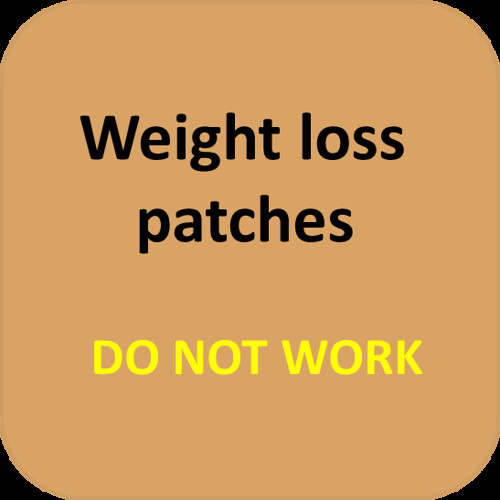
So... I've created this image, in Powerpoint, and uploaded it with a relevant description. One can but hope.

Weight loss patches do not actually work

Update 23 June 2011
I posted this on 18 June and have been watching Google to see if and when the patch might make an appearance somewhere. It's only five days since I created the image above so I'd expect this to increase as time goes on.

I searched for things like Jodiepedia patch or Jodiepedia patches and even Jodiepedia weight loss - to ensure that I only picked up web pages that were likely to include this patch, rather than the Cho Yung weight loss tea woo that I posted on Flickr earlier, I used the Advanced Search function on Google to select only items posted within the last week.

Here's what I found:
  • The image above was posted on Flickr on 18 June (along with this blog post) and I added the title "Weight loss patches do not actually work" and phrase "Do not buy this product, it's a waste of money. It's quite hard to get drugs across the skin barrier, especially large complex molecules from plants." to the Flickr image for good measure.
  • It was picked up by a site that collects royalty free images on 19 June (current) (cache)
  • Also on the 19th it was picked up by 'RandomlyChad' blog whose author used it to poke fun at the secret of his weight loss (ie sensible diet and effort, not crap weight loss patches).
  • On 21 June 2011 the phrase that I used appeared as a tagline on what I think is a spun article, called "Weight loss patches do not actually work – Articles And Resources", however the image of the patch is absent. The phrase is also parsed into keywords and used in the comments, along with 'Jodiepedia - there is a tiny piece of embed code available from this page and I used it to create this post here.
  • I'm really not sure what to make of this article "Support Is Mutual for Senator and Makers of Supplements", also posted on 21 June 2011. It doesn't appear to be selling anything directly from that page although there's a tab for a diet store and options to download things (I've seen much 'sell-ier' pages). To me, the interesting bit is that it's tweaked the text I used with my picture so that it now reads "Do not get this product, it really is a waste of income. It is quite hard to get medicines across the skin barrier, especially huge advanced molecules from crops." - this transformation may have been software-automated, but is only slightly changed from the text I originally used (see italics above).
  • Using the same "...huge advanced molecules" phrase, which suggests one might be the source text for the other, this website uses my title as its own title "Weight loss patches do not actually work" also changes the title of my image to "Bodyweight loss patches do not truly function".

    I don't think this website fully understands what it's doing as it's picked up another image from a US Federal publication highlighting bogus weight loss claims but it does label these as "Some awesome excess weight loss item photographs" which is obviously very pleasing...
  • "Weight loss - 7 tips for better results" seems to use the picture to highlight that there are better ways to lose weight.
Conclusion: nothing major yet - the image hasn't appeared directly on any selling sites but hopefully it will and I'll be monitoring the situation.

Update 2 July 2011
Well, I don't think this has been my most successful project, but I have 'reflected' on the strategy, and created a new image.

This new image uses a tweaked strategy, it plays nice in the picture itself but is critical of weight loss / diet patches in the title, description and comments (with bonus snark). I've noticed, in general, that sometimes websites pinch the Flickr comments and add them to their page on which the Creative Commons image appears. I'm pretty sure comments aren't CC in the same way that images are.

While re-running the Jodiepedia searches I also happened to come across this page. It uses an image I took at Chelsea Physic Garden of a sign about plants used in herbal and homeopathy preparations. I mentioned in the description that several NHS trusts had come to their senses and ceased funding for homeopathy, and I was mildly critical of homeopathy in the comment. But both picture and comment show up here and this is the original.