Stuff that occurs to me

All of my 'how to' posts are tagged here. The most popular posts are about blocking and private accounts on Twitter, also the science communication jobs list. None of the science or medical information I might post to this blog should be taken as medical advice (I'm not medically trained).

Think of this blog as a sort of nursery for my half-baked ideas hence 'stuff that occurs to me'.

Contact: @JoBrodie Email: jo DOT brodie AT gmail DOT com

Science in London: The 2018/19 scientific society talks in London blog post

Showing posts with label sneakery. Show all posts

Saturday, 27 September 2014

Sharing a link to a tweet may now notify that person, some suggested workarounds

by @JoBrodie, brodiesnotes.blogspot.com (this is an update of an earlier post)

Recently I was surprised to find a tweet in my notifications page that didn't @-mention me, it got there because the tweeter had included the link of an earlier tweet that I'd sent.

I use desktop Twitter (Twitter.com) and Echofon on iPhone and have only experienced this notification on the desktop version. It seems that others have also been experiencing it for the last few weeks and it may be something that Twitter is rolling out to everyone.

What is it?
If you include in your tweet an address link that looks like this
https://twitter.com/JoBrodie/status/514147218799222784 
then the person whose name is in bold may well hear about it, on their notifications page / tab.

Why is this of interest or concern to anyone?
People have previously used the method of including a tweet's address to draw attention to a tweet's content indirectly without notifying the person. When this is done to point to something that someone's said, covertly, it is sometimes known as subtweeting (the term "subtweeting" covers a range of Twitter behaviours though).

What's changed?
Previously no-one would be notified if this happened, now they will. Of course people have always been able to search your tweets, if they're public, and see what you've written anyway but it wasn't brought to their attention ('surfaced') in quite the same. 

What can be done?
Firstly be aware that sharing tweet URLs now seems to be equivalent to @-mentioning them. Whether or not this is a good way of including people in a conversation or of just annoying them will depend on the circumstances but best to know that they may see it.

Assuming you want to 'subtweet' covertly then the goal is to share the URL without triggering a notification.

Below are suggestions that I think will let you send a tweet without flagging it up. Remember though that if your tweets are public the person you're 'quoting' can always see your tweets (even if you've blocked them) so this isn't a foolproof method to let anyone snark with impunity.

Some methods are a little bit fiddly. To be honest if you want to be that secretive it's probably best to email people! But this post isn't really about the practical, more about the feasible - I'm interested more in the changing ways in which the technology behind Twitter works. 

Sneaky workarounds


1. Take a screenshot
A picture of the link or the tweet won't trigger the notification.

2. Break the address
Twitter treats web addresses (and hashtags) as clickable things - it recognises that a string of words is a web address and automatically turns it blue / underlines it, makes it clickable and makes it point to the relevant address. Just stick some characters in the link to stop this from happening - make sure that the person to whom you're sending the tweet knows how to mend it again (or the link won't work!).

For example http://www.google^^^.co^^.uk will not be recognised as http://www.google.co.uk 

3. Send it by DM
Although Twitter generally doesn't let you send many links via DM it does let tweet links go through fine. (But of course you can actually send any link by DM if you break it, as outlined in 2).

4. Use DoNotLink.com
This hides the URL and means that it probably doesn't currently trigger the notification (I've tried it and it doesn't, but not tested it to destruction, and Twitter is forever tweaking things). Incidentally you can cloak any URL this way so, for example, if you want to share the link of Widget.com's page without flagging this up to Widget Co (if they have a Twitter search running on 'widget' they'd come across your tweet) you can use this.

Note that other URL shorteners (bitly, is.gd, t.co etc) fail on this front. They won't hide the link for anyone searching, though I don't know if they will or won't trigger the notification.

5. Put the tweet you want to share in a Twitlonger post (but not in the first line).
Twitlonger lets you write more of a blog post than a tweet (you just log in by authorising it to interact with your Twitter account and start writing). It then posts just the first 120 or so of your post and adds a link so that people can click and go and read the post on the Twitlonger site. If you ensure that the link you want to share is placed after 120 or so characters it won't appear in the autoposted tweet and so can't trigger anything.

6. Share the minimum info needed to recreate the tweet
This is potentially risky because you'd have to include the person's name and if they have a search for that they'll see it immediately (whether or not this method triggers a particular 'your link has been mentioned' notification - I've not tried it and I don't think it does but not certain). If you and the person know who you are talking about you only need to share the link's string of digits to recreate the link.

All tweet addresses have the same format:
http://twitter.com / NAME / status / NUMBER
- if you know the NAME and the NUMBER you can recreate any link from scratch.

For my tweet above you only need JoBrodie and 514147218799222784 to recreate the full link.


Thursday, 10 October 2013

Inspired by *that* Mumsnet thread, I have a linguistics-related query

This is a 'where can I find out about... ' sort of query.

You might have heard of the thread on Mumsnet that went viral yesterday - it got into the Telegraph and the Mirror as well as buzzfeed and a whole bunch of people's Facebook pages.

It began after someone asked a question relating to a... well, quirk really, of their... let's call it 'post-coital cleanup' routine that had all the other posters on Mumsnet (and later the 'entire internet') fascinated, amazed and amused.

I read some of it on the train home last night and giggled so much the man sitting next to me got up and moved to another seat. It is spectacular and hilarious and possibly not quite safe for work so I shan't link to it but I'm sure searching for Mumsnet and beaker will bring it up instantly!

There are several hundred posts in the thread, stretching over about 30 pages (last time I checked was this morning) and while reading I noticed the the high number of consistently amusing 'asides' using strikethrough text. Possibly I'm the only person who made that observation on reading that thread ;) Some of the faux-deleted asides made me laugh more than anything else written and they're typically along the lines of saying one thing and meaning another.


It occurred to me that strikethrough is well-used in blogs where an author writes something, someone corrects them in the comments and then the author amends their post but keeps the original error so that the comment still makes sense, and for transparency and letting people track changes. This is done a LOT by science and skeptic bloggers and is generally appreciated by the community.

Cancer Research UK wrote a great blog post two years ago highlighting a particularly controversial clinic in Texas (the Burzynski clinic) that was (I'm not sure if it still is or has now been shut down) charging patients hundreds of thousands of dollars for an unproven cancer treatment. One of the family members of a patient complained about it and CRUK agreed to amend their blog but they did so by striking through the controversial text so it was still visible, and showing the 'approved' text agreed with the family member. I thought this was rather clever - you could see exactly what the family member had objected to and the much softer terms that had been agreed. It was an extremely effective technique, a tiny bit snarky perhaps (not in a bad way) and still fair to all sides.

So I've seen it used a lot online, also in more jokey ways when someone pretends they can't spell a word, crosses it out a few times and then uses one that's simpler to spell ("Yours sincrly sincereley faithfully").

Those are also the only times I've seen it used in printed items (comical) but I'm not aware of having seen it used snarkily in print, or that widely in print either.

How / where (eg what journals / blogs) can I find out more, such as:
  • Is there a name for the use of strikethrough text in sarcasm / snark / humour - it's often a witty aside but a particular way of using text. @4tis pointed out an online example of using ^H (caret H) in usenet discussions to denote 'backspace delete' which achieved the same effect, more at Wikipedia. EDIT - there *is* a name for this sort of thing, it's epanorthosis (Wikipedia / Silva Rhetoricae)
  • When did people start using it? I daresay in a world of print-only it might not exist as that would involve someone having to create a set of letters with a strikethrough mark through them, probably expensive for limited use, or perhaps I'm wrong
  • Has anyone studied its use as a tool of mostly good-humoured snark in online communities? I got the impression the people using it on Mumsnet were both smart and technically savvy and clearly using it deliberately (I mean obviously if you just changed your mind you'd simply delete the text! So this is a deliberate form of textual and sub-textual communication). A friend of mine has done some linguistic analysis of online communities so will certainly ask them too!

Also, if no-one's researching this can I found the journal Strike Through Strikethrough Proceedings?

Also, also, there's a really obvious joke that I'm not making either ;)


Thursday, 28 July 2011

Update on skeptical sneakery - using Flickr images as creative commons Trojan horses on sites selling woo

Shortened link: http://is.gd/jKM8RI

A little while ago I discovered, while doing a vanity google of my Flickr photos, that a couple of my pictures had found their way onto website pages selling food supplements, herbal remedies or homeopathy and I wrote about it here.

I was surprised to see that in a few of them they'd not only pinched the title I'd given the photo but also the comments that I'd added to my own Flickr page. Some of my comments were critical of the types of products that they were using the photograph to advertise, which amused me. Naturally the cogs began to whir and I wondered if i could exploit this by uploading the equivalent of photographic Trojan horses.

While I don't really think I'm stopping people from buying nonsense (and I doubt I'd be able to get any evidence) I've been refining the process to try and put my photos to work.

From what I can gather, the most fun can be had with:
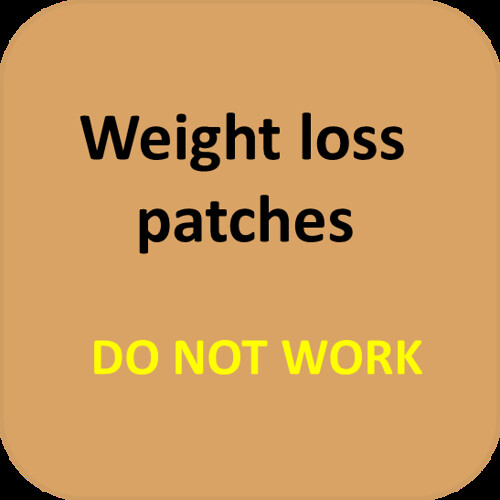
1. Images (I created mine in PowerPoint) that are available under a Creative Commons license, tagged with weight loss or diet pills (or whatever fraudulent woo you want to target). I've created a basic image of a 'diet patch' with text on it saying that they don't work.
2. A title and description that are overtly critical of the product, ie 'diet patches don't work'
3. Addition of a comment that you've added, for the websites to pinch and pretend it was added by someone commenting on their page - I amused myself with "If this comment appears on a website other than..."
4. Adding to the comment an unformatted URL that readers can copy and paste (html'ed links don't seem to work when the comment is copied to its new location). I might even try drawing attention to it.

I'm also thinking about adding in a fake positive comment, that links to the blogpost I mentioned in the first paragraph.

An example of what I'd call a 'successful hit' is this one http://cowbid.com/diet-patches-2/ - my image appears near the top of the page and then there's some text advertising the product. For some reason a smaller version of my image appears again but this time it has my title "Diet and weight loss patches – they don’t really work, save your money" and critical description "Nicotine is a small plant-based alkaloid that easily dissolves in water and non-polar solvents. This does not mean that all plant-based molecules, or mixtures of molecules, can get across the skin and there’s no evidence that herbal diet patches are of any use beyond extracting money from your wallet. Avoid."

My comment appears there too "If this comment appears on a website other than my Flickr stream then it’s been pinched from this page and posted without permission. You may well be looking at a website that’s hoping to cheat you out of some money. Run away", and just in case it gets deleted I've frozen the page here http://www.freezepage.com/1311890041DRDYOIBFJO

There are two reasons that I'm particularly pleased to find that this particular page has unwittingly used my critical title and description.

One is the link that can be found within the phrase "Weight Loss Diet Patches" - it's from MoreNiche and is an affiliate marketing tracker http://track.moreniche.com/hit.php?w=125995&s=163

The other is that the page redirects to Roduve's Slimweight patch http://www.slimweightpatch.com/swp_en/

I've written about both MoreNiche and Slimweight patches here "Do Slimweight patches work? How?"

Saturday, 18 June 2011

Seeding articles of woo with sensible information - an experiment

Shortened link for this post: http://is.gd/jiE7ua

Well I haven't tried it yet so this might not work.

A while back I took a photo outside Holland & Barrett in Blackheath. It was flogging something called Cho Yung weight loss tea and since I'd never heard of a tea being of any serious use in weight loss (unless you give the dunked biscuits a swerve) I thought I'd investigate it for an Advertising Standards Authority investigation. I uploaded the photos to Flickr (almost all of mine are Creative Commons) and then forgot about it.

Occasionally I 'vanity google' for my Flickr username (Jodiepedia) and enjoy seeing the ways in which some of my photos are used, admittedly it's mostly a handful that are used and the most popular one is a photo of my mini food processor which has appeared in half a dozen blog posts but it's nice to see them used anyway.

Recently I discovered that my photo of Cho Yung weight loss tea was appearing on several websites that flog / affiliate market this product. More amusingly they'd taken not only the photo but the description, which at the time said "yet to find any evidence for this product" so this phrase appears on numerous pages trying to sell the tea. Tee hee.

It's probably too late to do much about the tea, although I've now retrospectively tweaked it so that the title is more critical and added further context and shall monitor the situation, but I wondered if I could seed the pages that try and flog weight loss patches with a picture that clearly states they don't work.

First, a word about these pages.

They're 'spun' articles. I have been learning quite a lot about article spinning from the More Niche affiliate marketing website which has been one of the more eye-opening websites I've ever come across. It's basically how to fleece the unwary using a combination of search engine optimisation (both 'white hat' and the dodgier, short-term (cos they get banned) 'black hat' methods) and creating websites that route customers to a selling page. The pages that route more customers get more cash. Spun pages are basically repurposed text - self-plagiarism really, or plagiarism of other sites with word swapping, there are even websites that maintain a massive thesaurus database and will automate the process of word swapping to turn one article into another. If you've ever come across a page which contains your search terms randomly embedded into something that doesn't appear to have English as its first language then it might well be a spun page, presumably using other keywords as some sort of smokescreen. It's a bit odd.

I've written previously about More Niche here, see the section below the dashed line in particular.

Given that a degree of cunning and sneakery is needed to be successful at this I don't think my ruse will fool that many of them but I will be delighted if one or two pages pick it up because it will make me chuckle.

So... I've created this image, in Powerpoint, and uploaded it with a relevant description. One can but hope.

Weight loss patches do not actually work

Update 23 June 2011
I posted this on 18 June and have been watching Google to see if and when the patch might make an appearance somewhere. It's only five days since I created the image above so I'd expect this to increase as time goes on.

I searched for things like Jodiepedia patch or Jodiepedia patches and even Jodiepedia weight loss - to ensure that I only picked up web pages that were likely to include this patch, rather than the Cho Yung weight loss tea woo that I posted on Flickr earlier, I used the Advanced Search function on Google to select only items posted within the last week.

Here's what I found:
  • The image above was posted on Flickr on 18 June (along with this blog post) and I added the title "Weight loss patches do not actually work" and phrase "Do not buy this product, it's a waste of money. It's quite hard to get drugs across the skin barrier, especially large complex molecules from plants." to the Flickr image for good measure.
  • It was picked up by a site that collects royalty free images on 19 June (current) (cache)
  • Also on the 19th it was picked up by 'RandomlyChad' blog whose author used it to poke fun at the secret of his weight loss (ie sensible diet and effort, not crap weight loss patches).
  • On 21 June 2011 the phrase that I used appeared as a tagline on what I think is a spun article, called "Weight loss patches do not actually work – Articles And Resources", however the image of the patch is absent. The phrase is also parsed into keywords and used in the comments, along with 'Jodiepedia - there is a tiny piece of embed code available from this page and I used it to create this post here.
  • I'm really not sure what to make of this article "Support Is Mutual for Senator and Makers of Supplements", also posted on 21 June 2011. It doesn't appear to be selling anything directly from that page although there's a tab for a diet store and options to download things (I've seen much 'sell-ier' pages). To me, the interesting bit is that it's tweaked the text I used with my picture so that it now reads "Do not get this product, it really is a waste of income. It is quite hard to get medicines across the skin barrier, especially huge advanced molecules from crops." - this transformation may have been software-automated, but is only slightly changed from the text I originally used (see italics above).
  • Using the same "...huge advanced molecules" phrase, which suggests one might be the source text for the other, this website uses my title as its own title "Weight loss patches do not actually work" also changes the title of my image to "Bodyweight loss patches do not truly function".

    I don't think this website fully understands what it's doing as it's picked up another image from a US Federal publication highlighting bogus weight loss claims but it does label these as "Some awesome excess weight loss item photographs" which is obviously very pleasing...
  • "Weight loss - 7 tips for better results" seems to use the picture to highlight that there are better ways to lose weight.
Conclusion: nothing major yet - the image hasn't appeared directly on any selling sites but hopefully it will and I'll be monitoring the situation.

Update 2 July 2011
Well, I don't think this has been my most successful project, but I have 'reflected' on the strategy, and created a new image.

This new image uses a tweaked strategy, it plays nice in the picture itself but is critical of weight loss / diet patches in the title, description and comments (with bonus snark). I've noticed, in general, that sometimes websites pinch the Flickr comments and add them to their page on which the Creative Commons image appears. I'm pretty sure comments aren't CC in the same way that images are.

While re-running the Jodiepedia searches I also happened to come across this page. It uses an image I took at Chelsea Physic Garden of a sign about plants used in herbal and homeopathy preparations. I mentioned in the description that several NHS trusts had come to their senses and ceased funding for homeopathy, and I was mildly critical of homeopathy in the comment. But both picture and comment show up here and this is the original.


Saturday, 24 April 2010

Sidewiki in the service of skepticism

When I first heard of Google Sidewiki I was intrigued by the possibility of underhand comment sneakery, but also about how an organisation could find out if it had been Sidewikied (without actually having to download the Sidewiki toolbar themselves). I don't have an answer for that, but since I wrote my Posterous blog post "Thoughts on Google's Sidewiki" I've downloaded the toolbar and have been having some (mildy) mischievous fun ever since.

Rumour has it that Carter Ruck blocked some Sidewiki comments possibly relating to #Trafigura though I've no idea if this is true, or how they'd be able to do that but that post has some further information, and their website appears to be free of Sidewiki comments (although my Sidewiki button is 'active' meaning that they don't seem to have blocked the possibility of comments).

Mildly interestingly, Trafigura's homepage http://www.trafigura.com sometimes resolves to http://www.trafigura.com/#gLoozNOvbHDk which has zero Sidewiki comments and sometimes resolves to something with a different ending, that does have comments, eg http://www.trafigura.com/#e796zBz0BtTE - I'm not sure what to make of that.

I've not been commenting on the political stuff, just on sites of woo, and have kept my comments short and sweet in most cases (for some I've only added a link) so as to be super careful to prevent coming across as rude or worse.

But I have been commenting. And I've particularly enjoyed randomly coming across the secret sidewikis of other skeptic types, which prompted me to tweet that I thought of sidewiki as a little like geocaching a message, that may or may not be seen.

It's possible for people who've not downloaded the toolbar to see sidewikied comments if given an appropriate link, and apparently the comments show up in one's Google profile (I've not filled in enough information to warrant a profile but I'm not troubled by this and like the pretence of being 'under the radar').

Here's one I wrote earlier, about sugar pills and bad advice.

I've written a few more - mostly just posting a link to sense on a website where sense is currently absent - but I'm a little surprised that the skeptics haven't made more of the opportunity to add graffiti to another organisation's website than they have, although perhaps not everyone is as childish as me ;-) I'm imagining a 'Sidewiki map' created by a network of skeptics who map any instance of woo they come across, to a more skeptical page.

--- Edited for sense ;) ---

-------
Postscript: just before I copied and pasted this from notepad into Blogger I visited Twitter only to see that #Trafigura is back in the news again - I wonder if there will be any sidewiking going on too. When I started writing this blogpost I hadn't considered linking the Trafigura hashtag, but in light of latest news I have.

Sunday, 10 January 2010

Downloading files via mild geeky skills

Every now and again I remember a song I heard years ago via 3wk.com (http://www.3wk.com) - I don't get to listen to music radio in the background these days as much as I'd like but sometimes I remember that I enjoyed hearing a particular song, and want to hear it again.

Generally I go straight to YouTube as most stuff's there, or Last.fm, or imeem.com (before it was bought by MySpace and shut down - I'm afraid that regardless of what Cory Doctorow has to say about MySpace it's not going to convince me to assault my eyeballs and visit it) or one of the other places. You can nearly always hear a snippet of a tune at amazon.COM although not so often at amazon.CO.UK and iTunes is usually worth a visit.

The track I was after is from - Antarctica - a band that apparently lasted a year, releasing one EP and an album and were last heard from in about 1998. I'm not a particular fan but I really liked the beginning of the song, Hallucinus, which was this electronic synth thing that then went a bit indie. Quite annoying whiny vocals come in a bit later too.

Anyway, bit of googling later and I found that I could listen to it here http://pizza.saur.us/ but what I really wanted to do was to download it. The format of the 'mp3 listening bar' on that page is used on plenty of other pages and usually lends itself quite well to downloading an mp3 with a 'right-click, save as' manoeuvre. However on this occasion I was thwarted by Flash.

More generally some pages don't make the downloading (or 'playing in another window') link obvious - perhaps deliberately but probably not - but you can usually uncover the file's real, individual URL by clicking VIEW / VIEW SOURCE - this usually gives you the full html coded text for the entire page you're looking at, including all the links and sources of files.

I was quite pleased that I managed to download the track by searching within this 'source code' for the word 'Hallucinus', which appears a handful of times, then selecting the relevant string of text that looked most like an URL or filepath, which was this:-
http%3A%2F%2Fpizza.saur.us%2Fdelivery%2F%3Ff%3DAntarctica%20-%20Hallucinus%26e%3D1

Punting this over to a fresh browser window didn't work because all of the %xyz stuff - I don't really understand what this is all about, and notice it only as an annoyance that crops up every now and again that needs trimming out.

I think it's pretty obvious that %3A is going to be : and that the two %2F strings are going to be // but I wasn't too sure about the rest, so I googled %2F and found http://en.wikipedia.org/wiki/Percent-encoding which told me what should replace the %bits. Quite a lot like code really, as I just looked up %3D and found that it should be the = sign.

That gave me this:-
http://pizza.saur.us/delivery/?f=Antarctica+-+Hallucinus&e=1

Once the URL was reconstituted correctly I put that in a new window and it automatically downloaded as the mp3, and is saved to my desktop - listening to it now.

Another thing to be aware of is that the filepath might include only the bit after the domain name, eg /deliver/?f=... in which case you need to manually add in the domain name yourself (http://....) so it'll work.

I've collected a few files in this way, although websites that hide much of their code in Flash etc make this a bit harder.

Probably the only reason I know this stuff is that I played around under the bonnet of html code a bit in the early 90s and picked up / absorbed some helpful skills from doing so, while creating basic web pages. It had really never occurred to me that everyone else didn't tweak URLs to suit themselves until I read this article by Snyder Consulting, called "Seven tricks that web users don't know" http://www.snyderconsulting.net/article_7tricks.htm

Anyway, like Ray Mears I'm hoping to keep the old skills alive :)